Project case study
Game Theory Atlas
An interactive research and learning platform for exploring strategic behavior through a searchable model catalog, guided paths, preserved studies, and a multi-agent commons lab.
- Status
- live
- Evidence
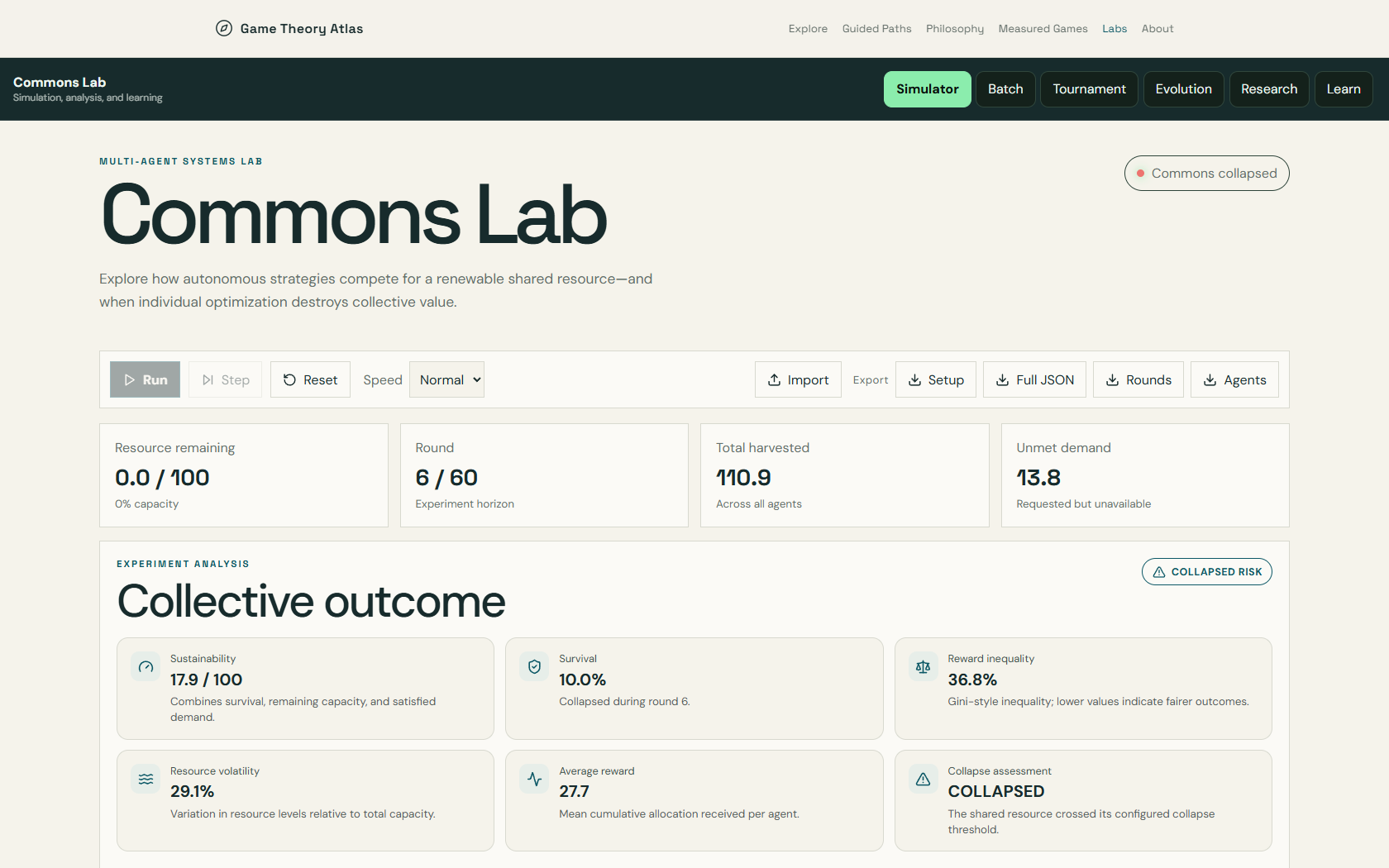
- 42 models appeared in the Explore catalog on November 8, 2026.
- Evidence
- One searchable interface connects Philosophy, Measured Games, and Commons Lab.
- Evidence
- Guided paths connect five themes across the catalog.
Topics
Live simulation captures
Games in action
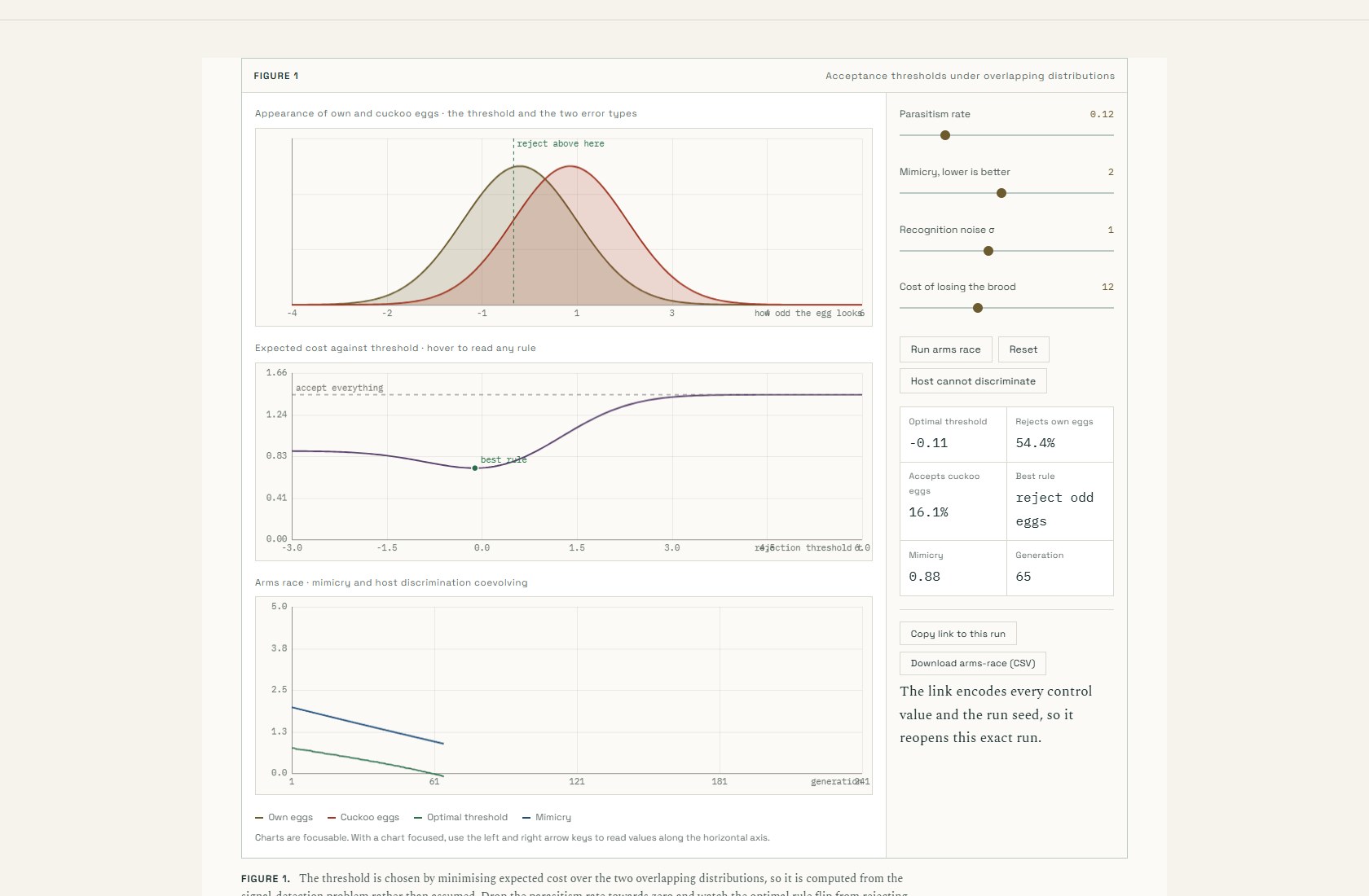
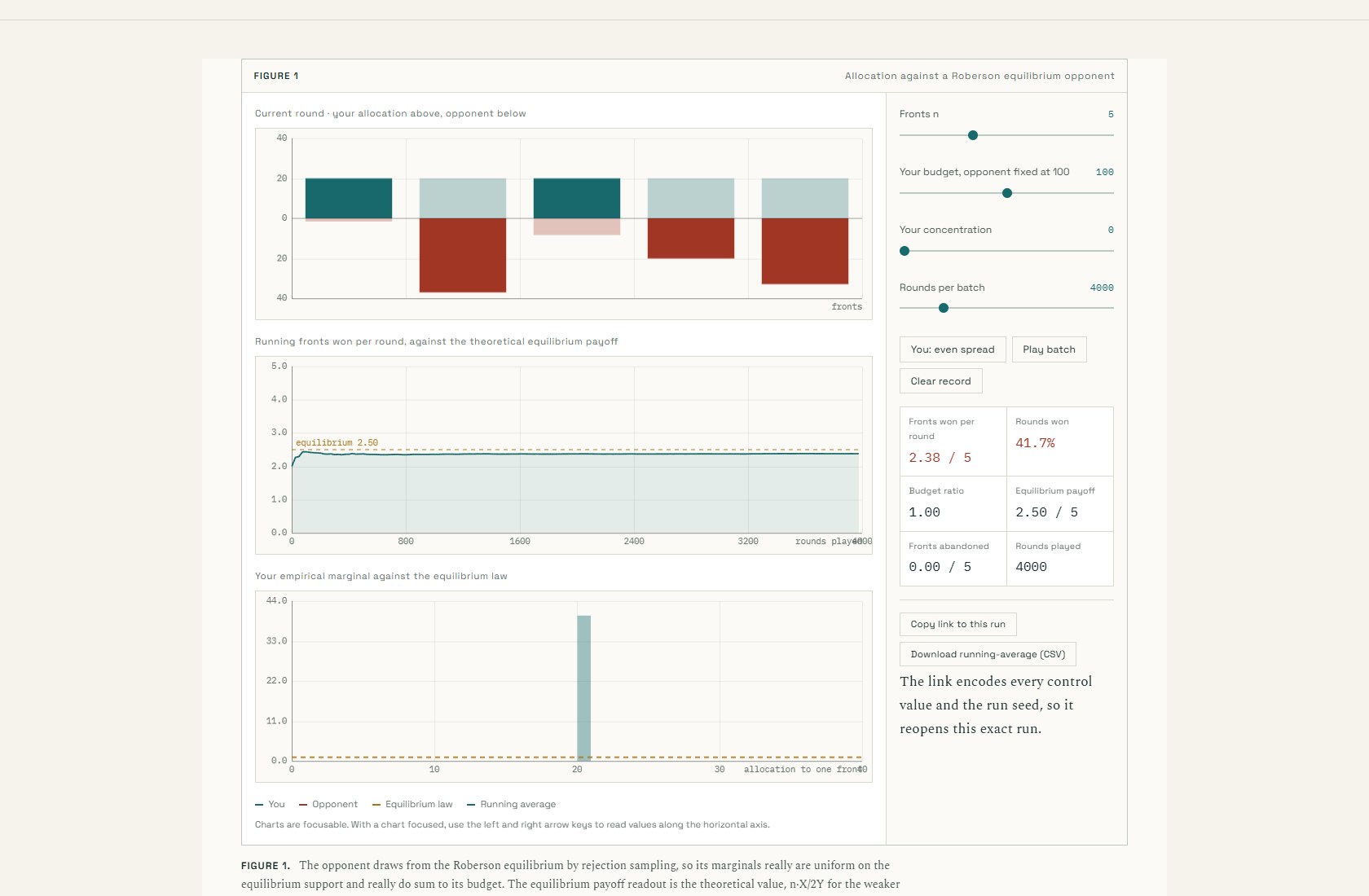
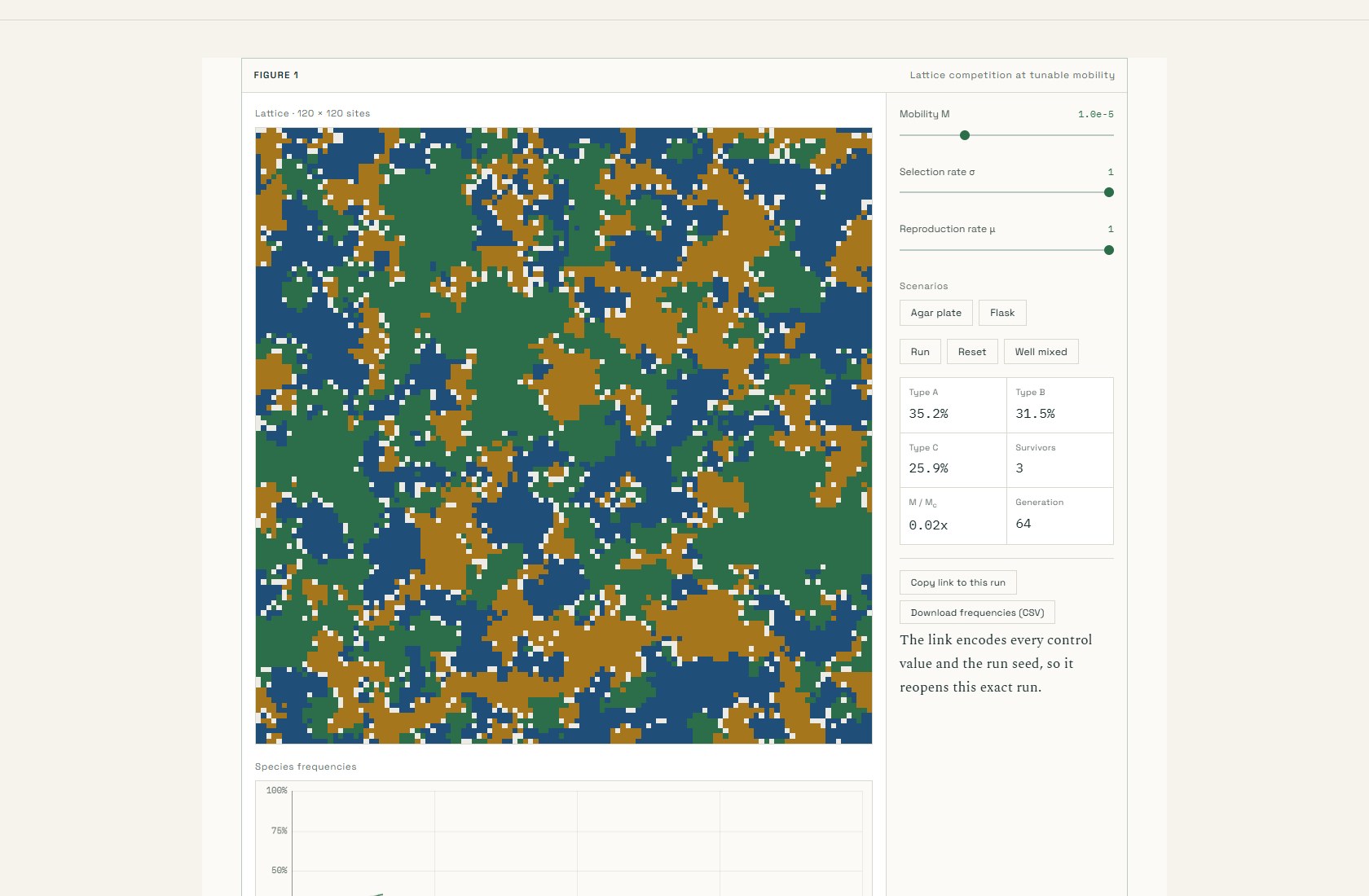
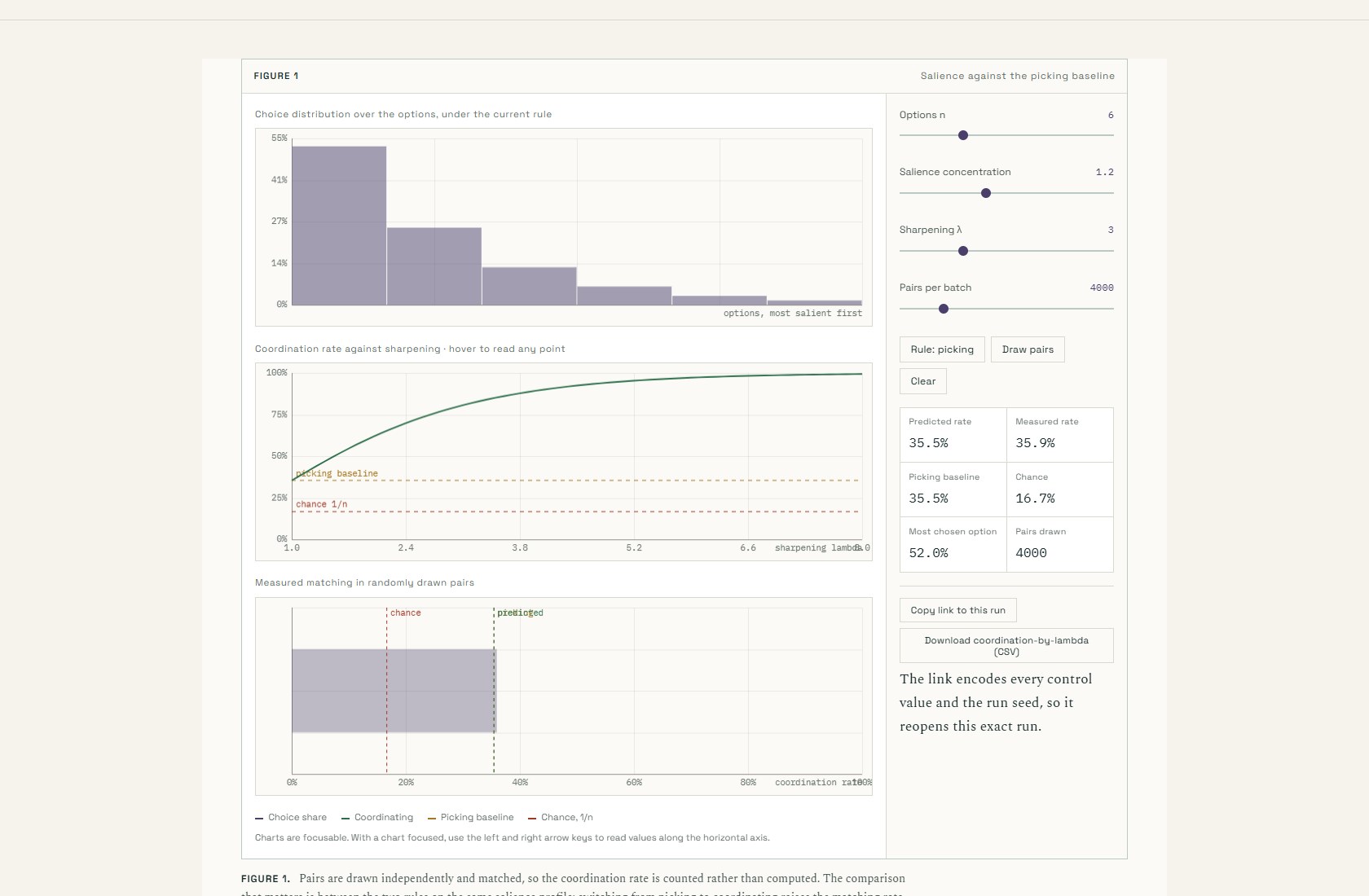
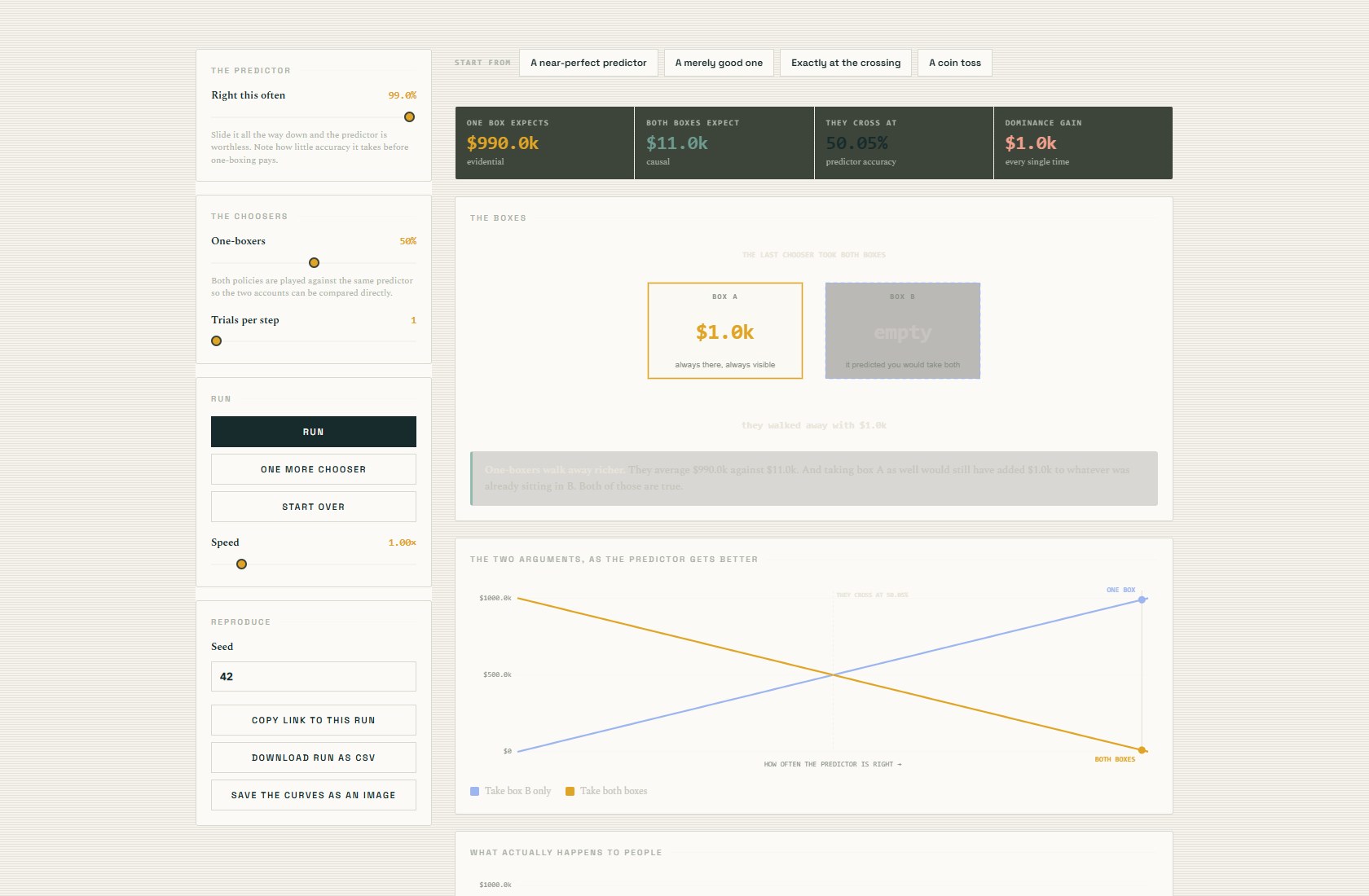
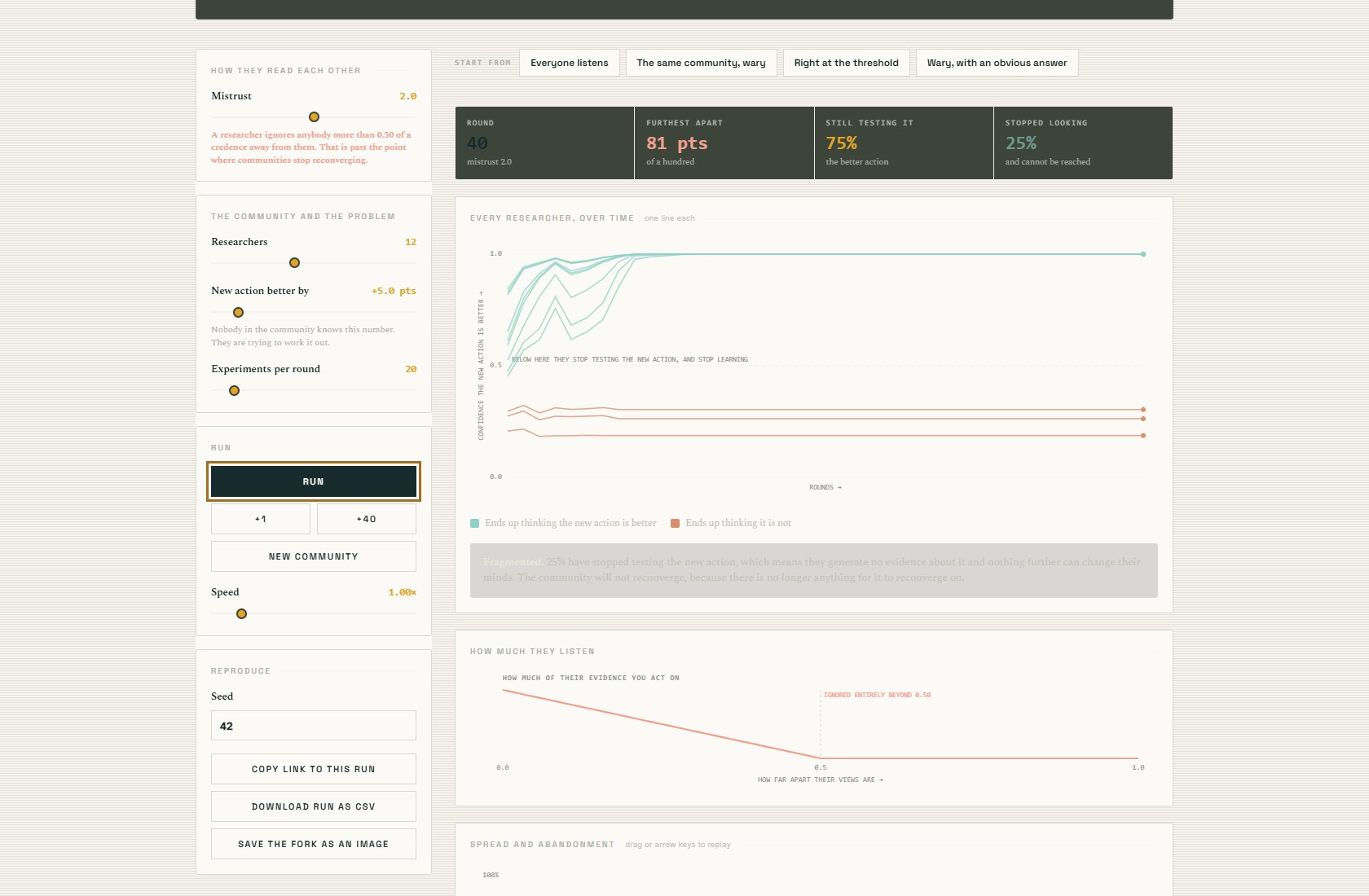
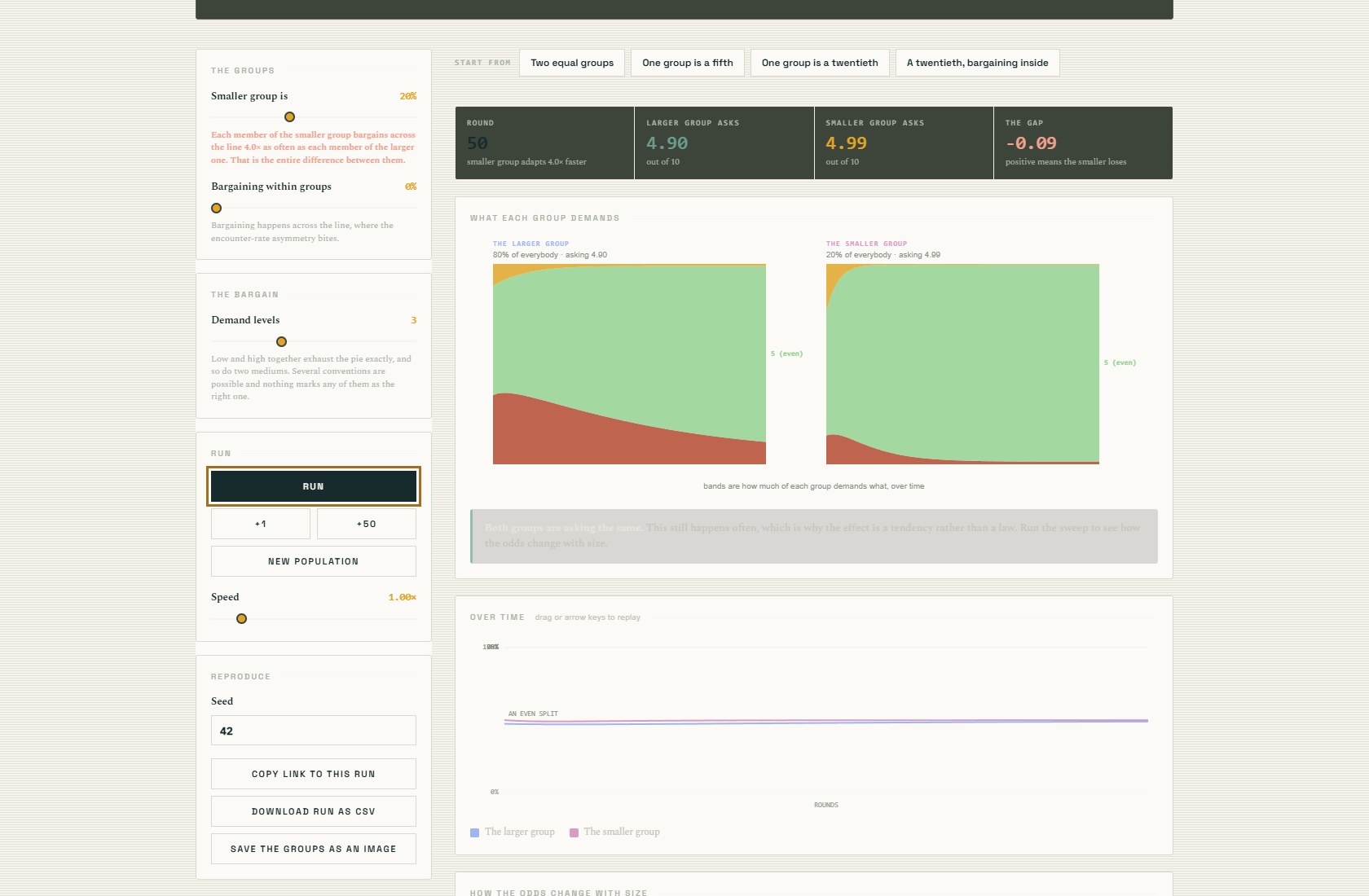
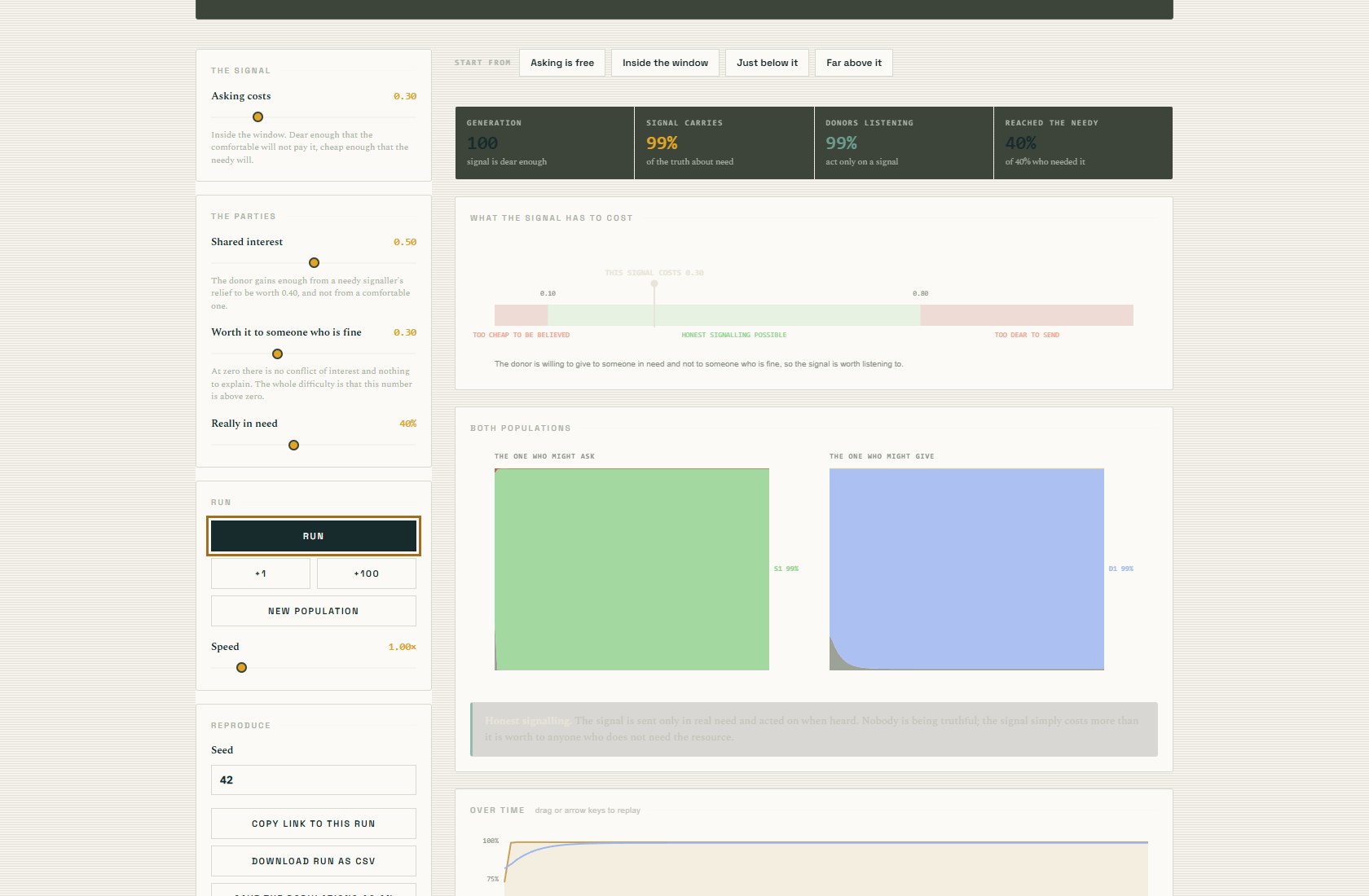
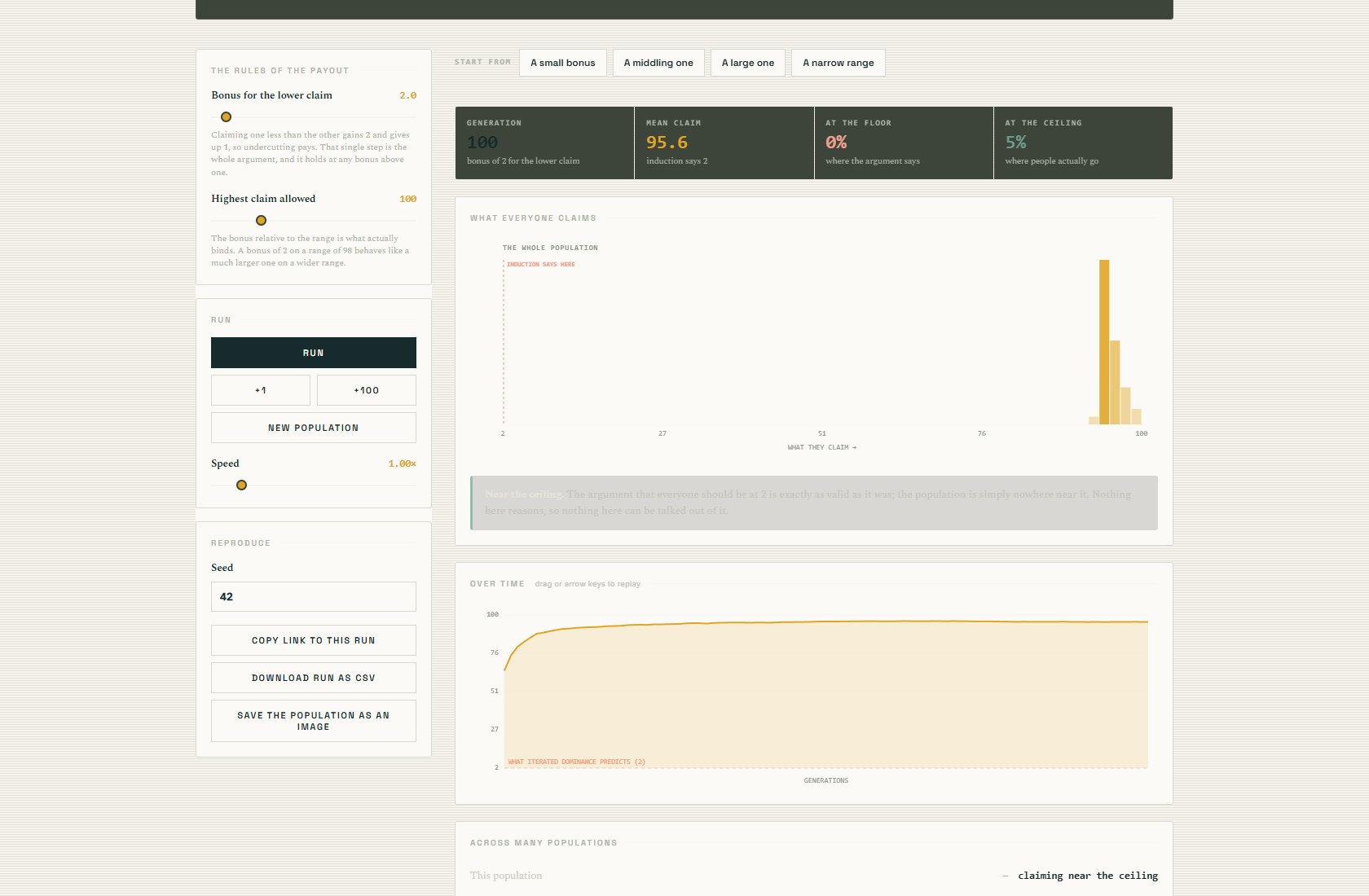
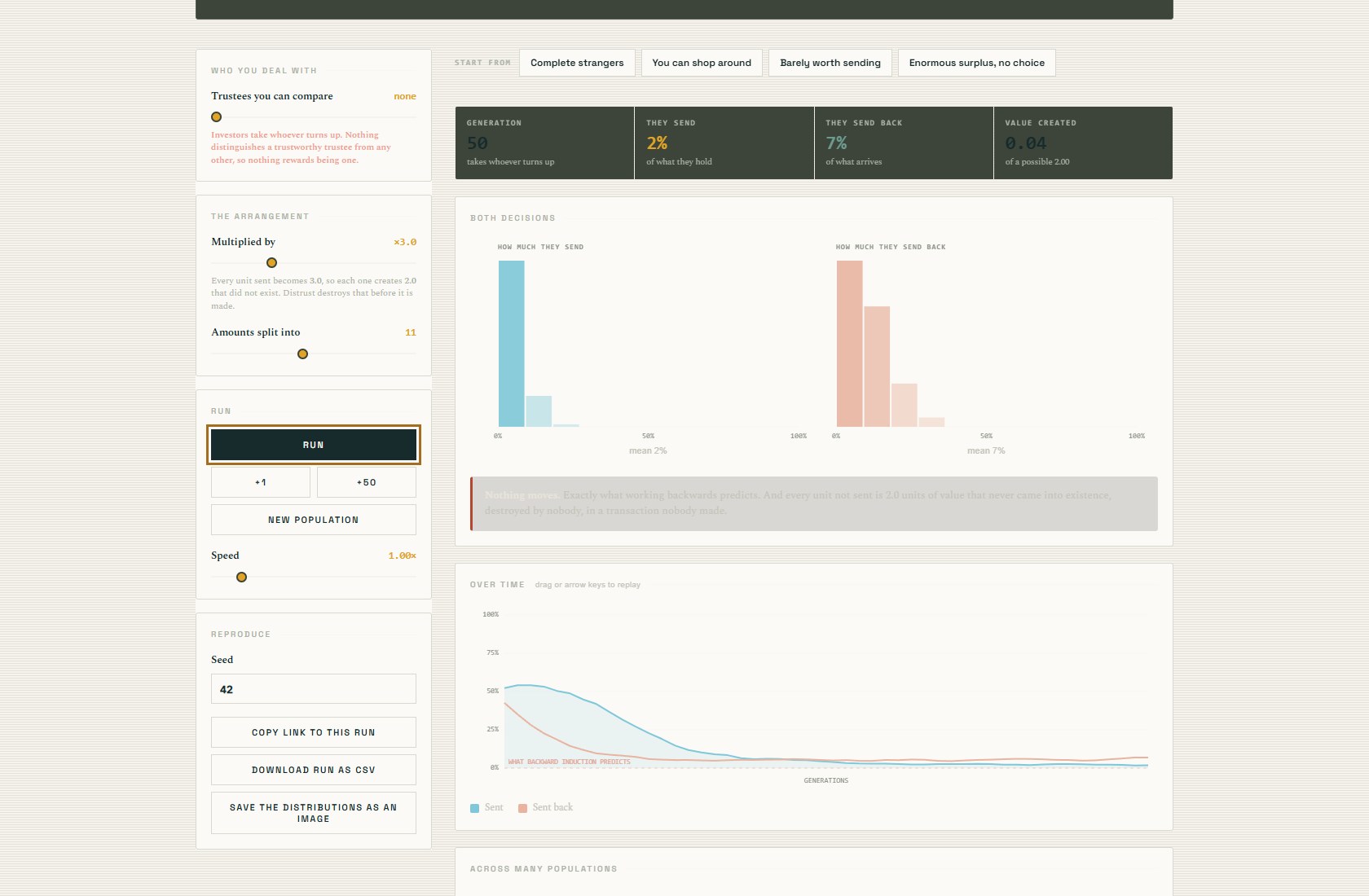
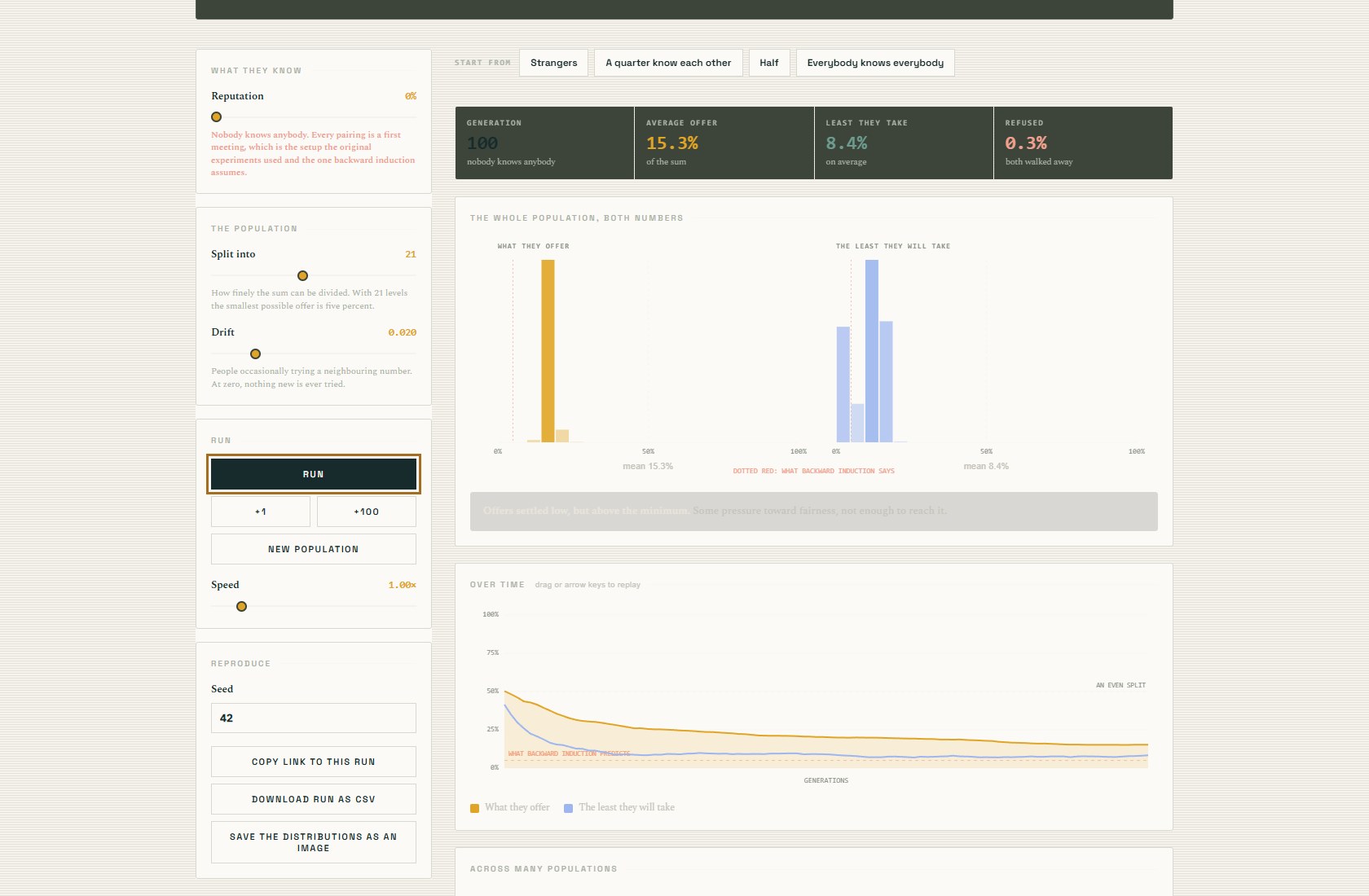
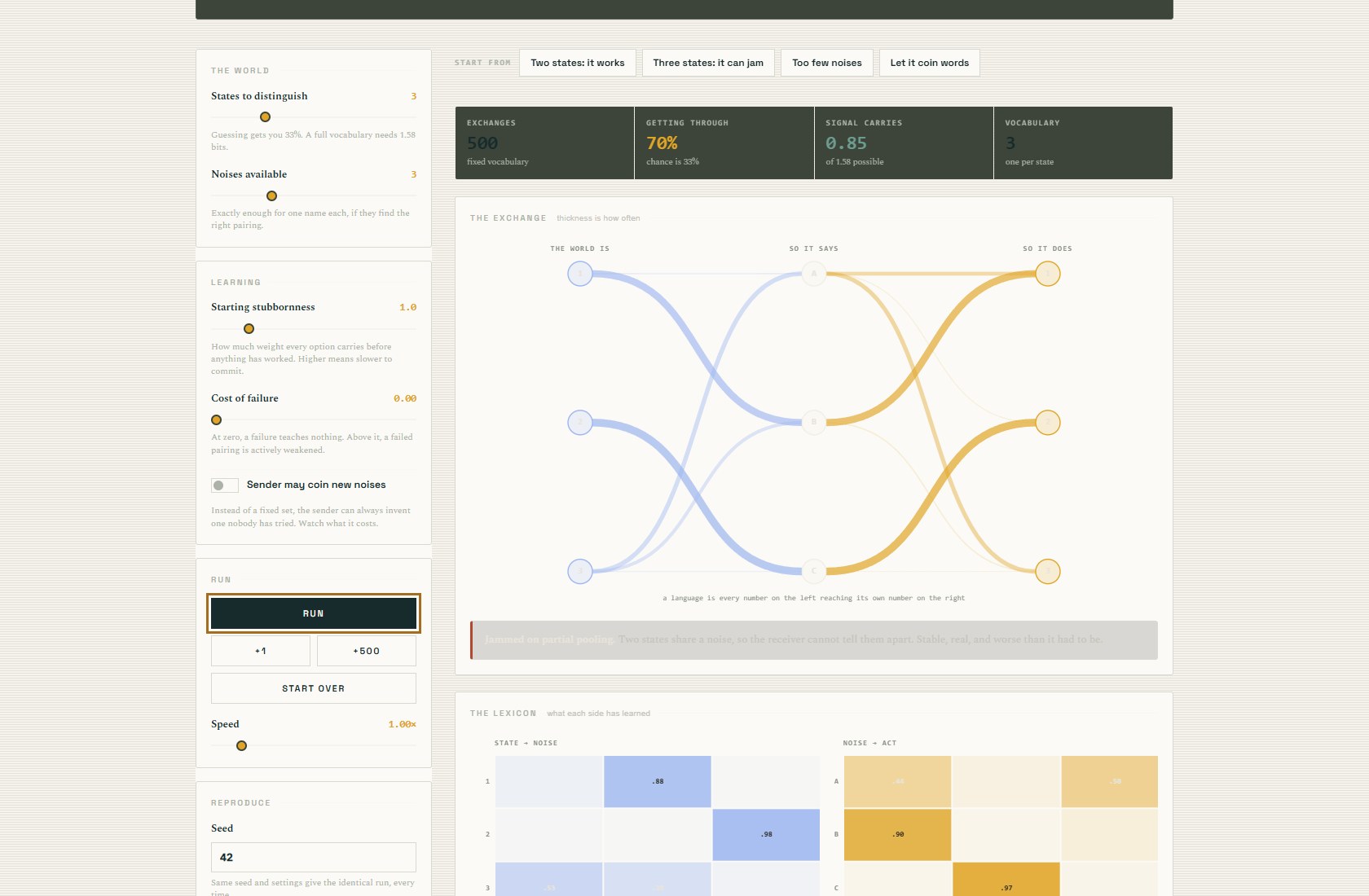
Explore 41 game and model examples. Choose a game, or watch the gallery rotate every six seconds.
1 / 41
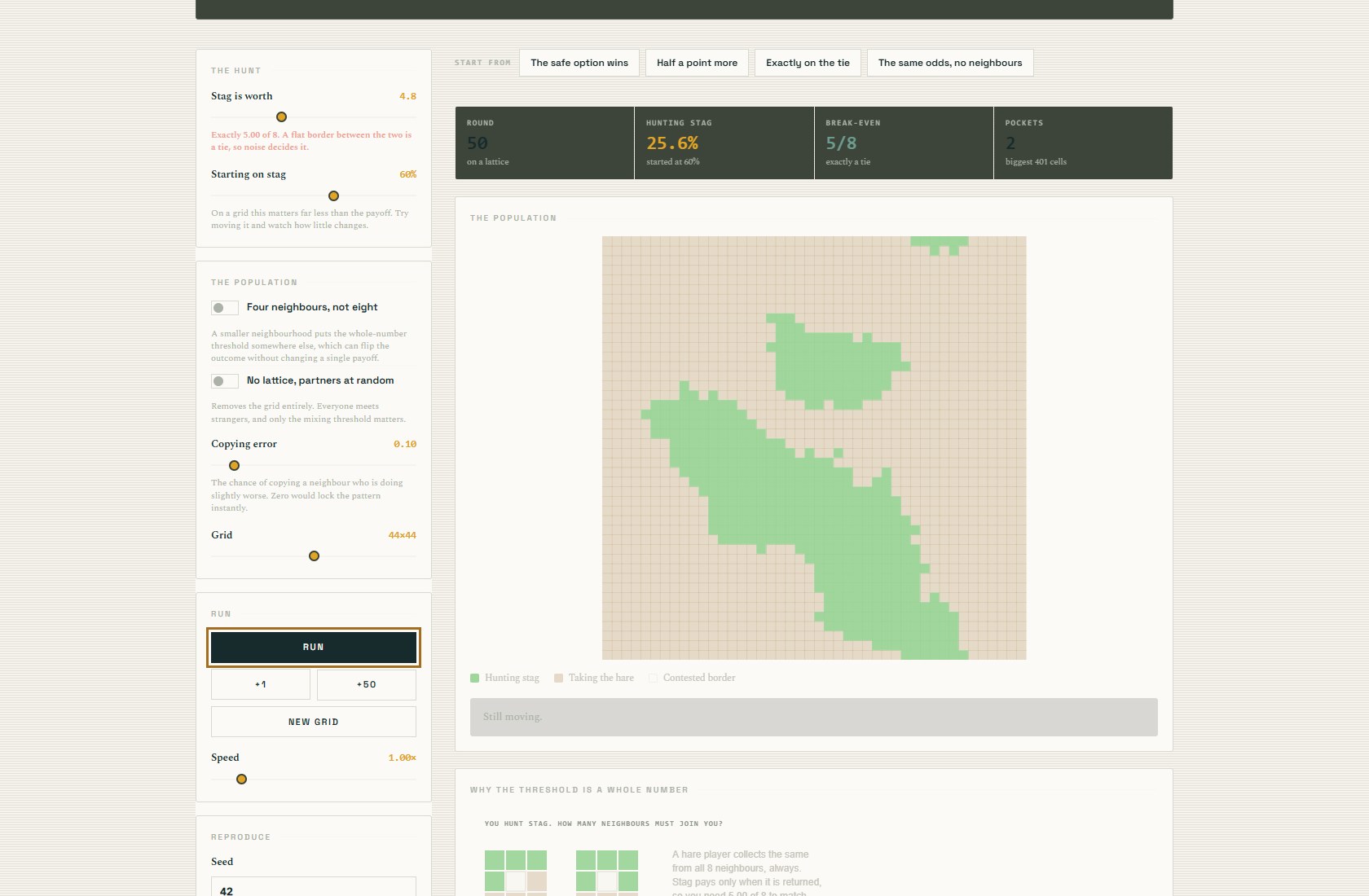
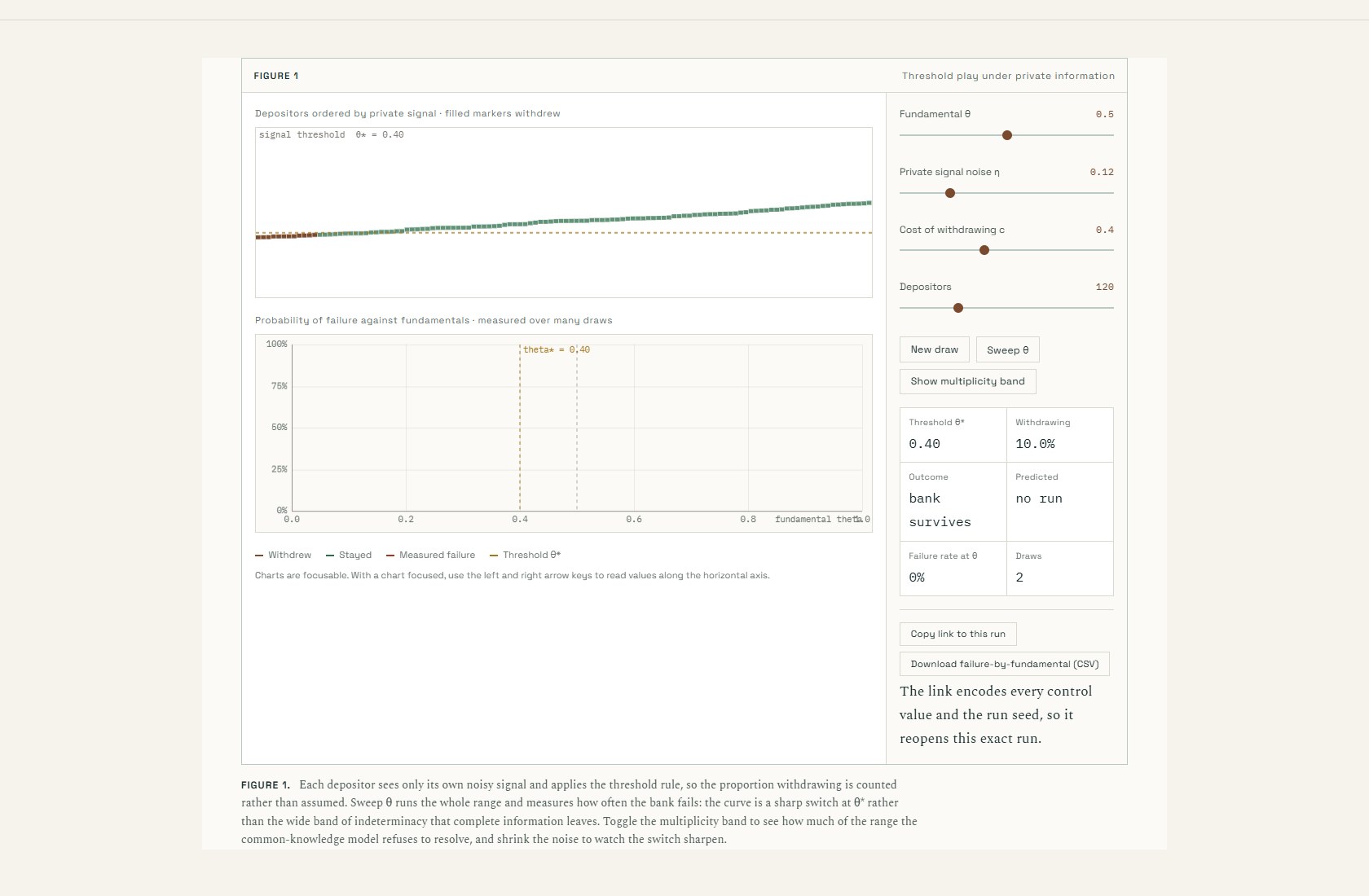
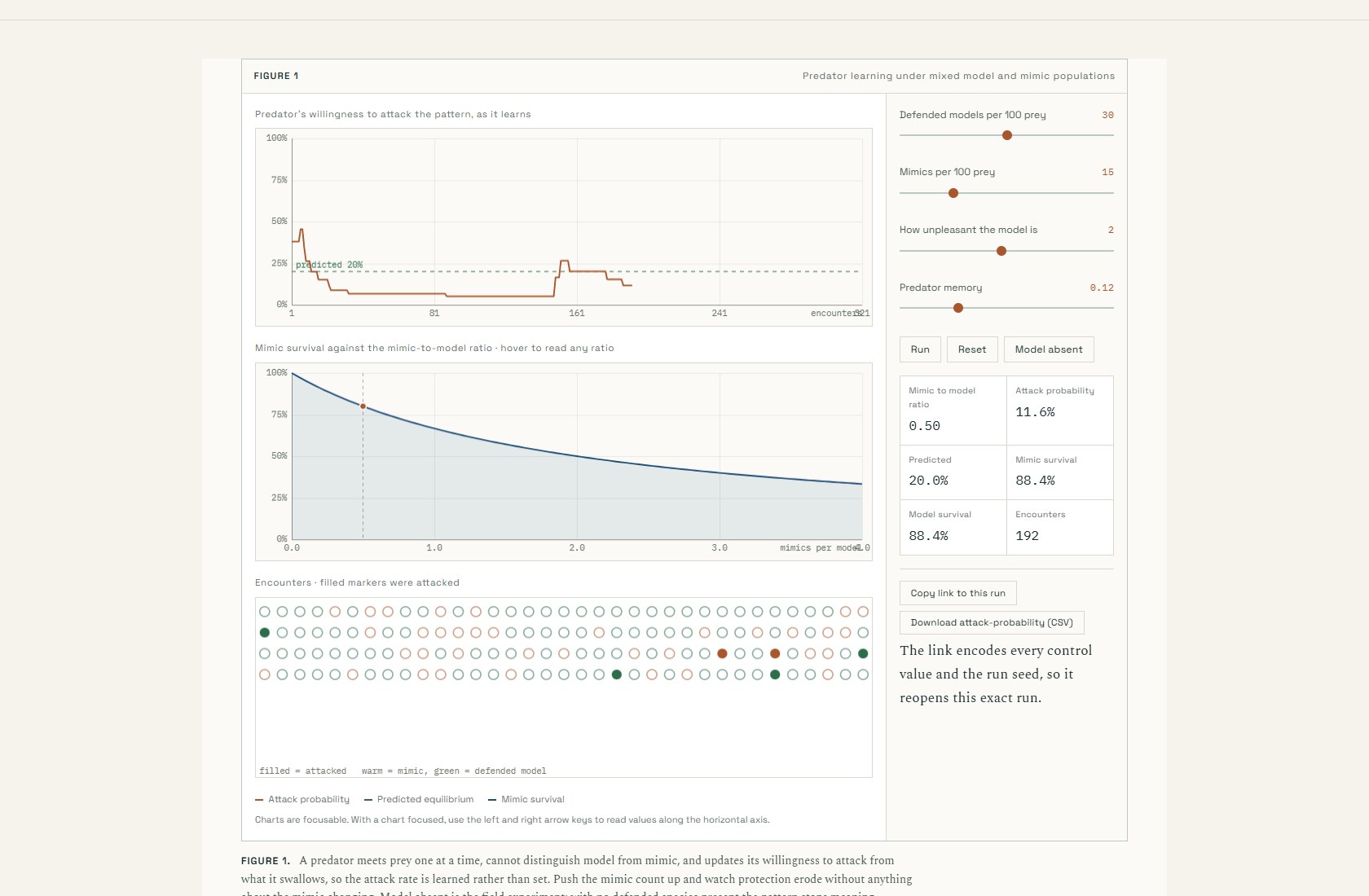
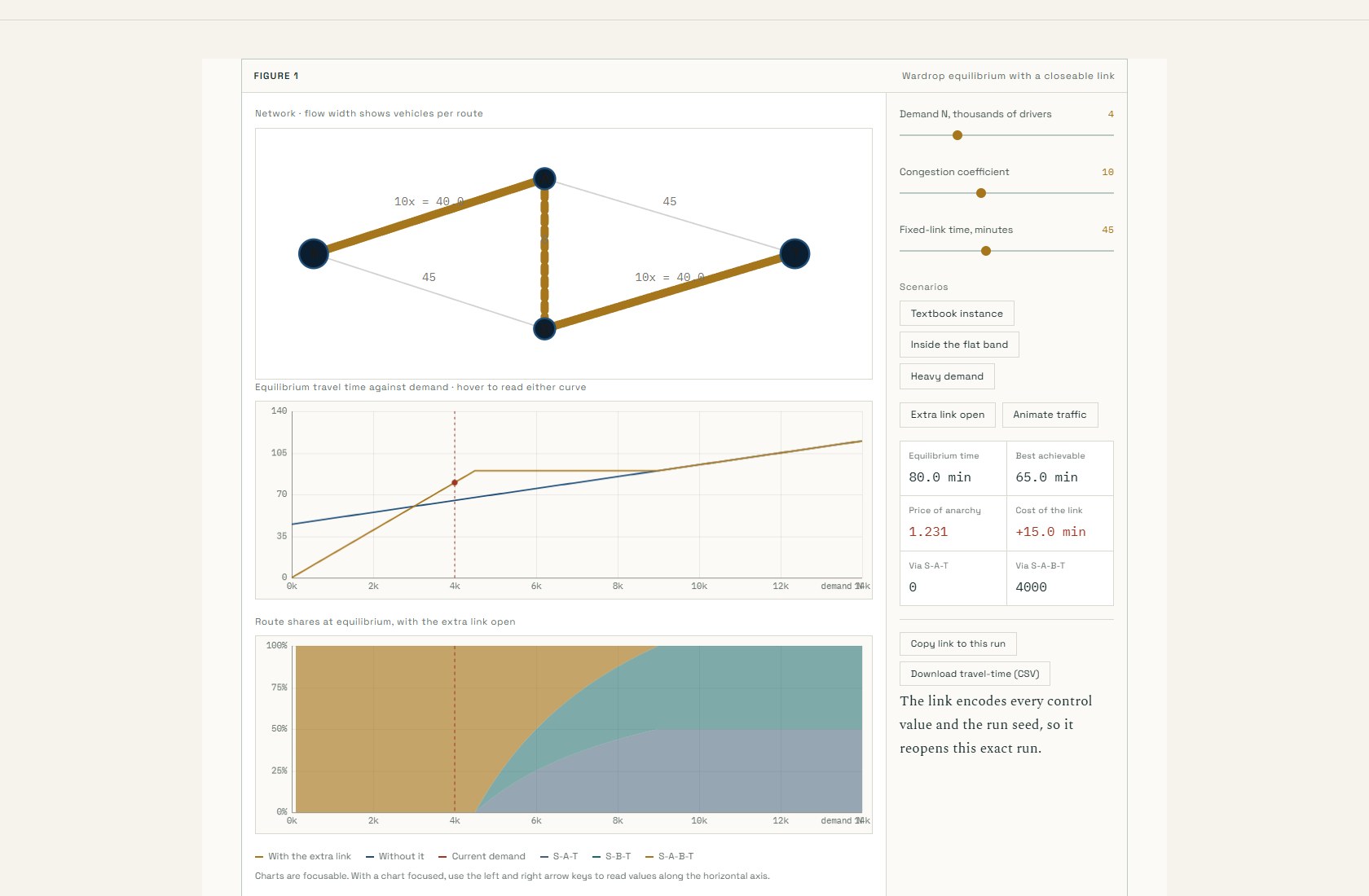
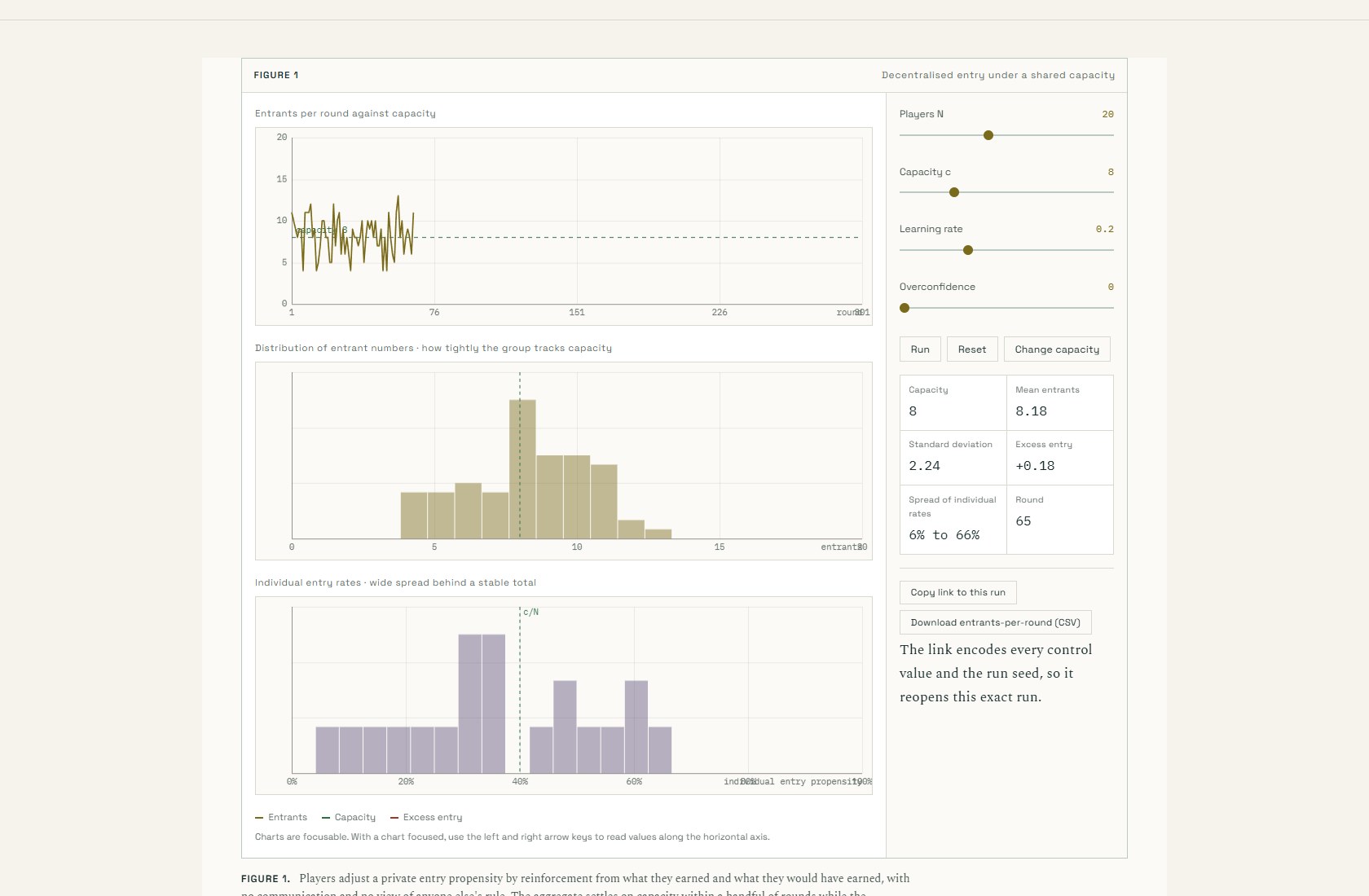
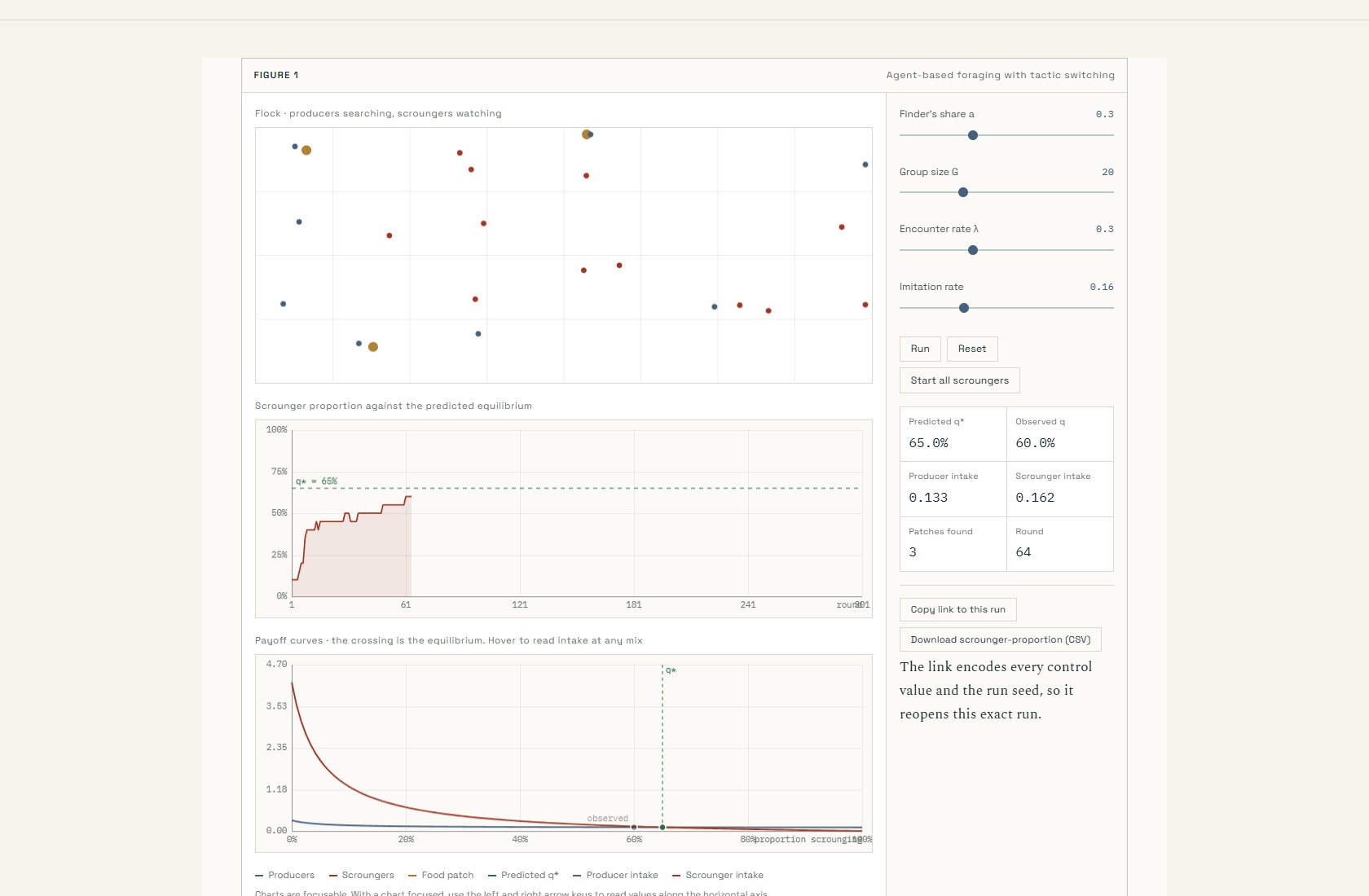
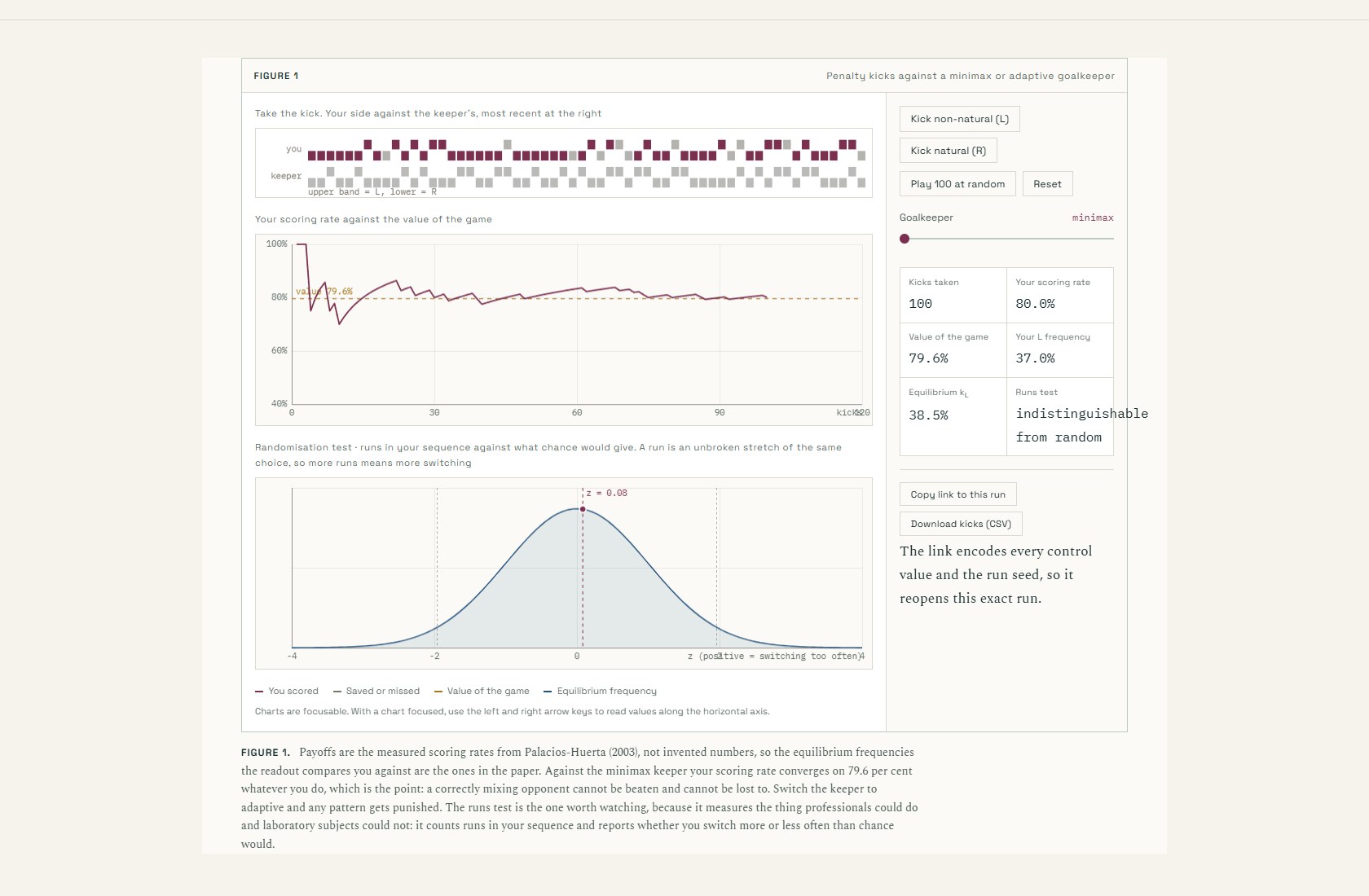
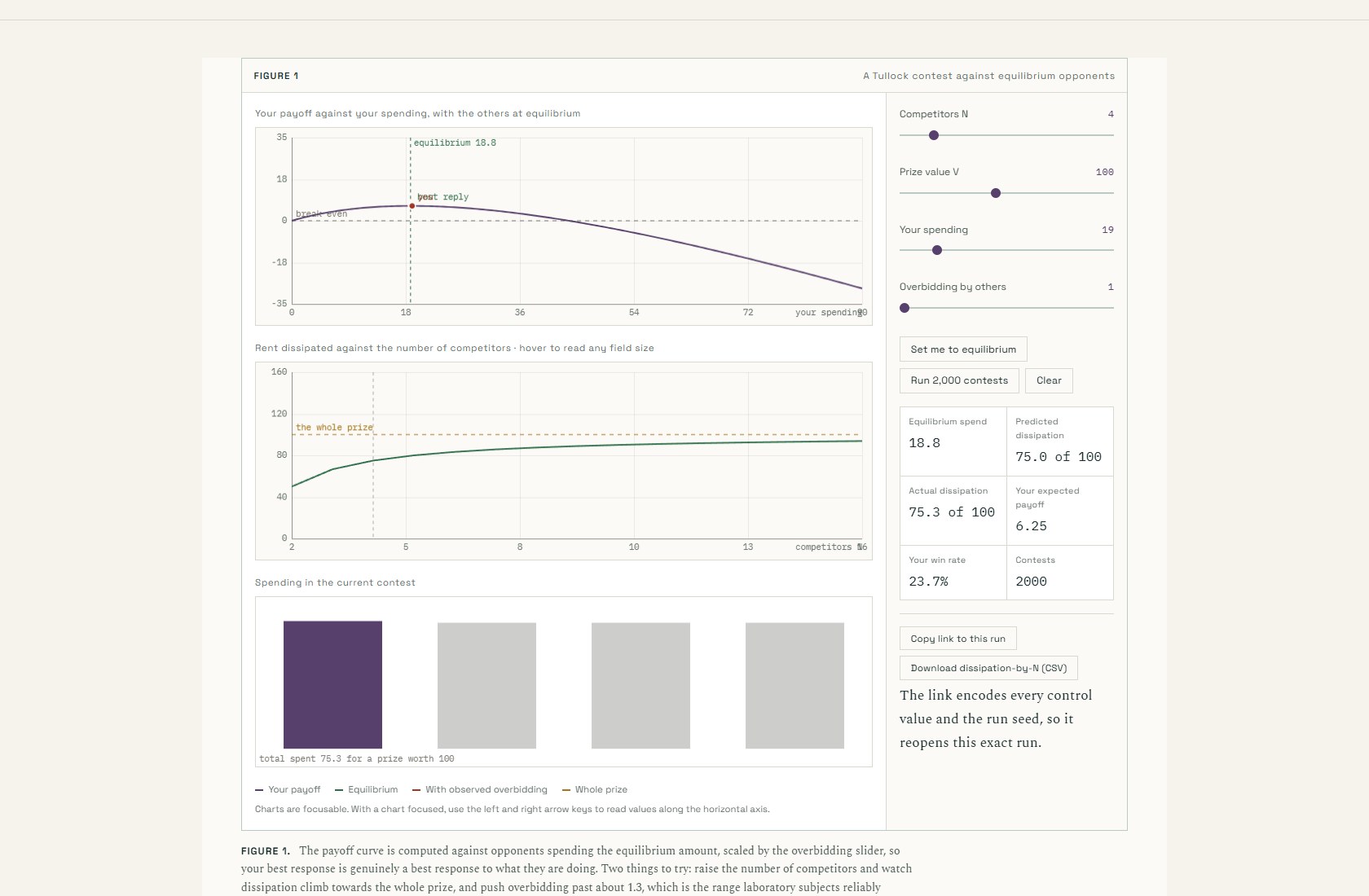
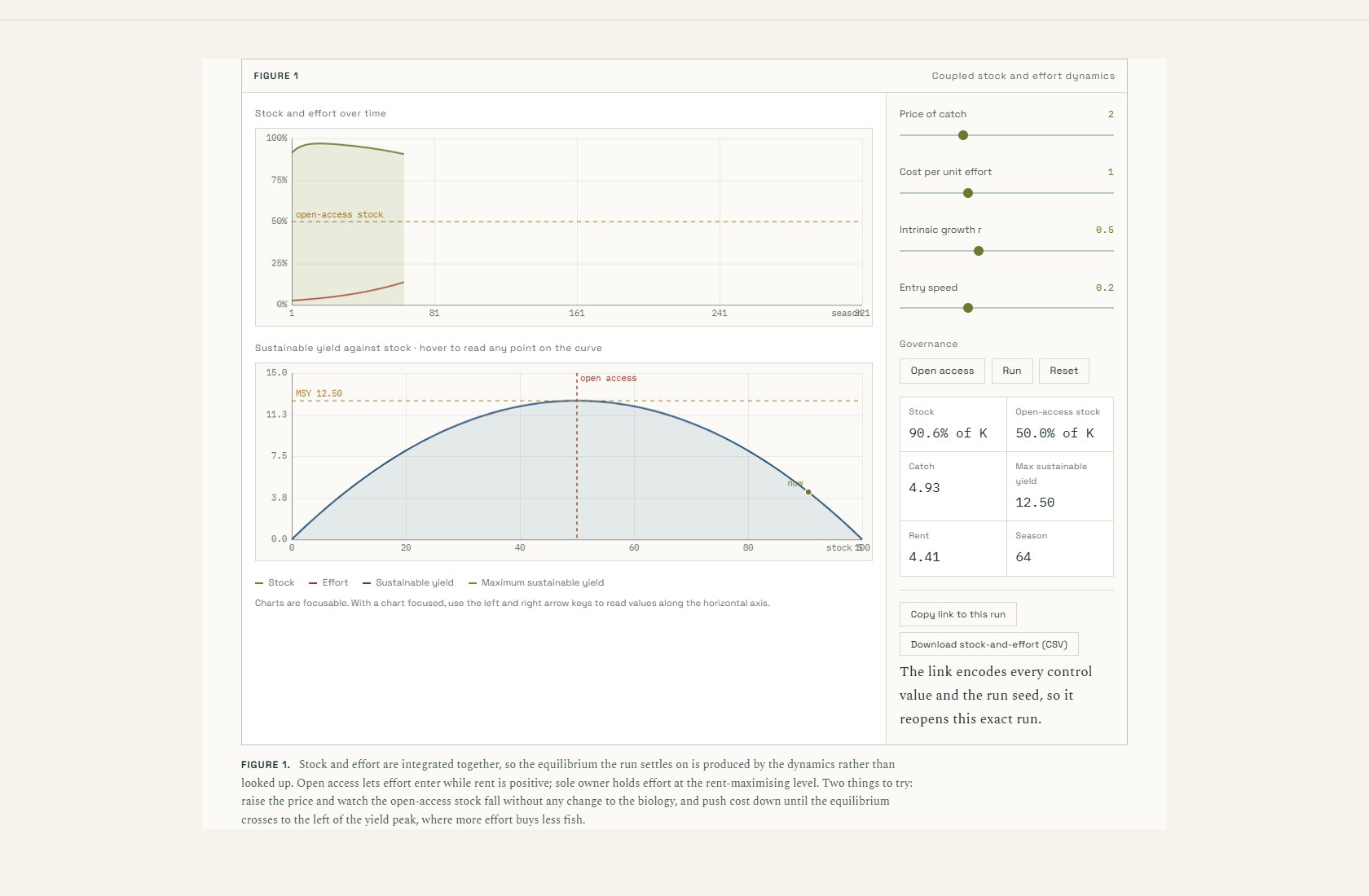
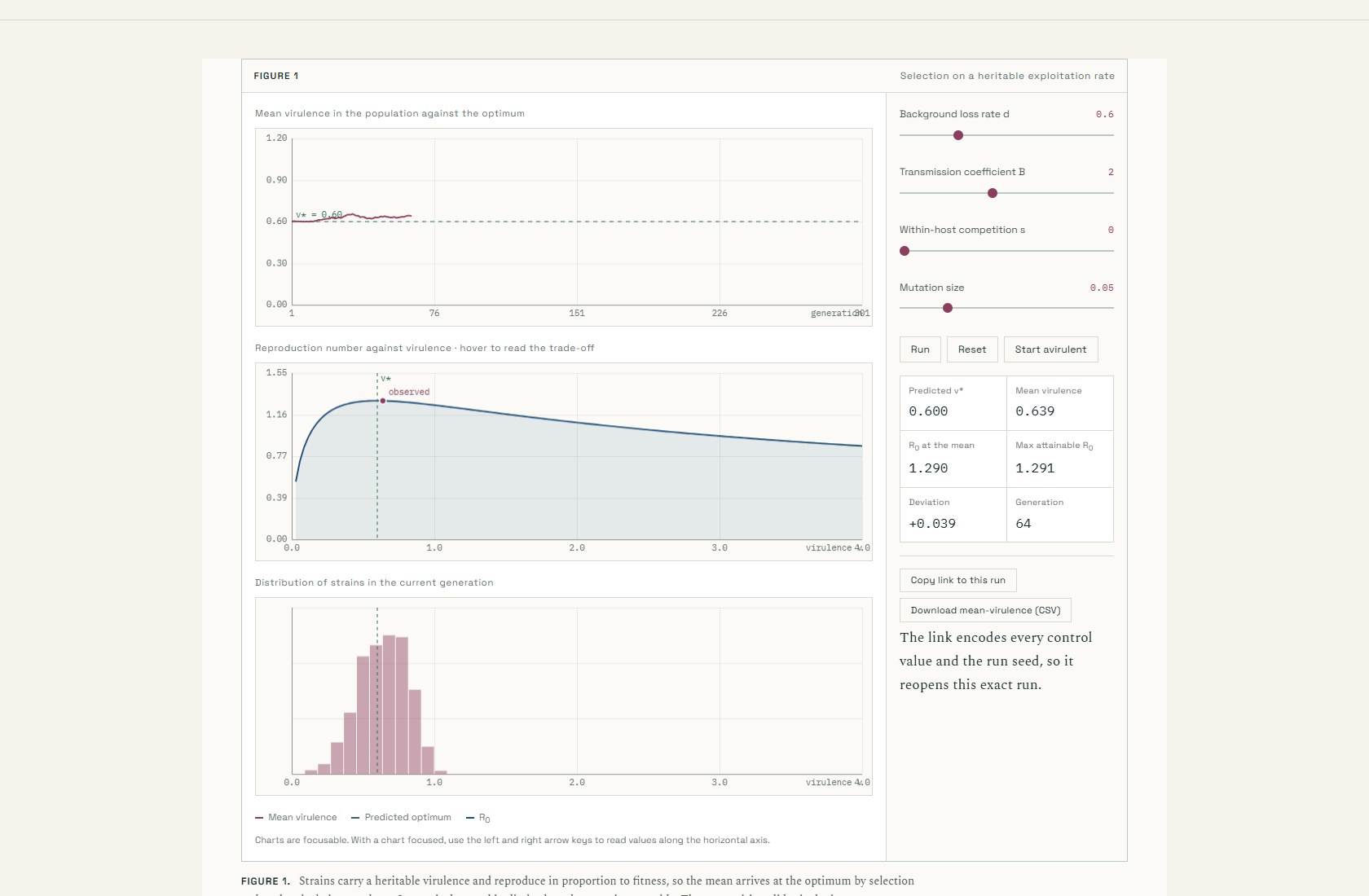
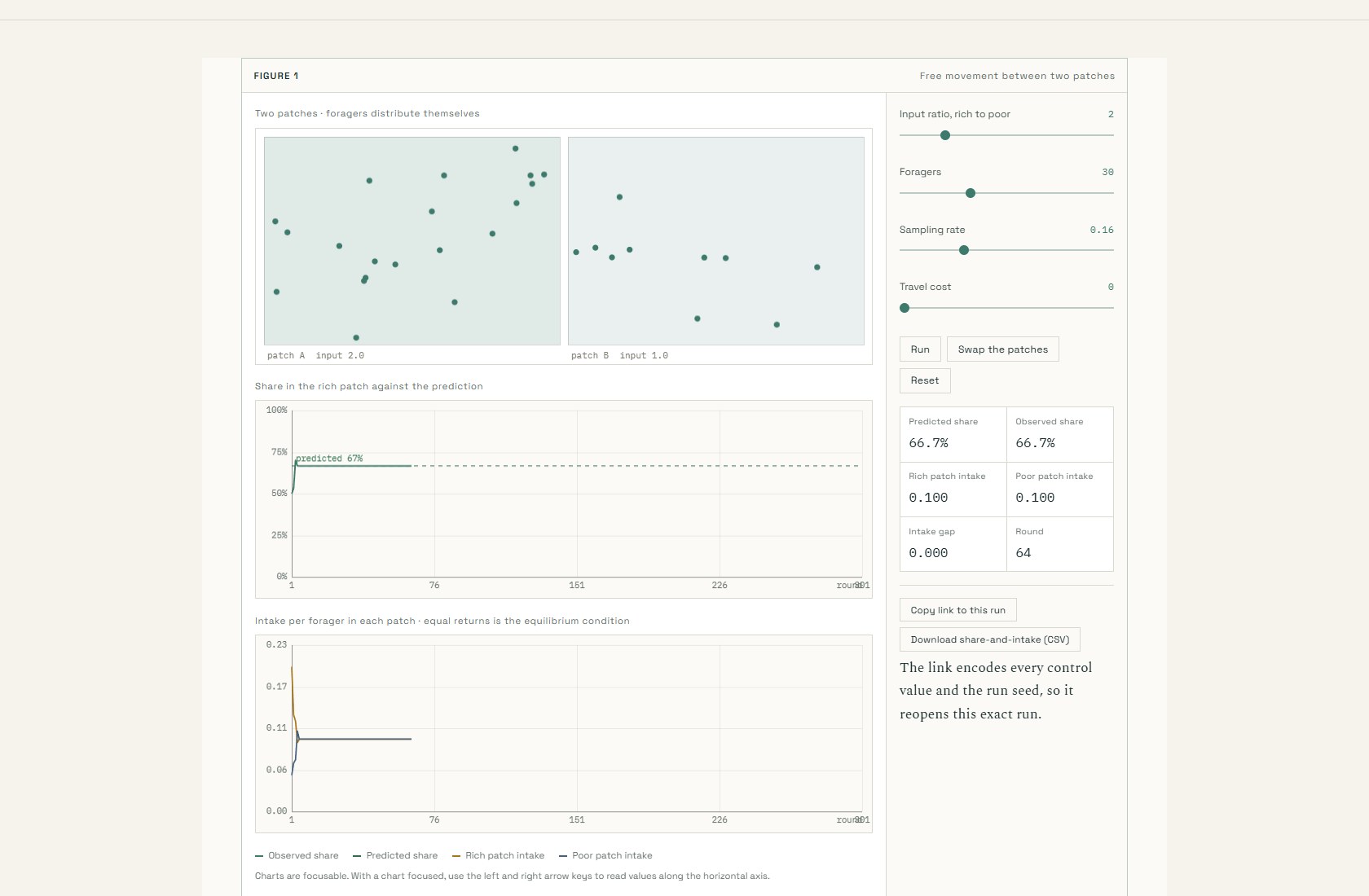
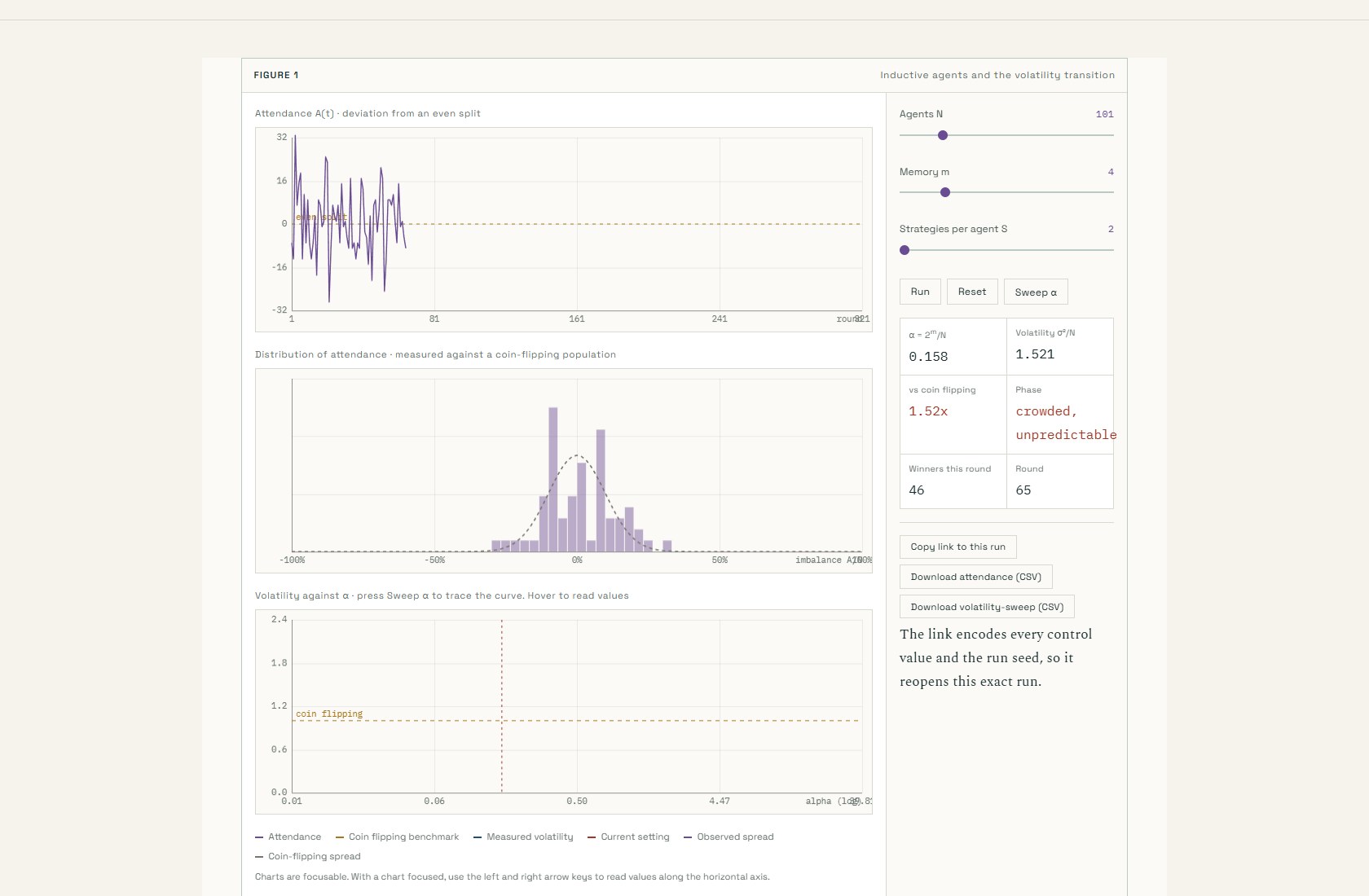
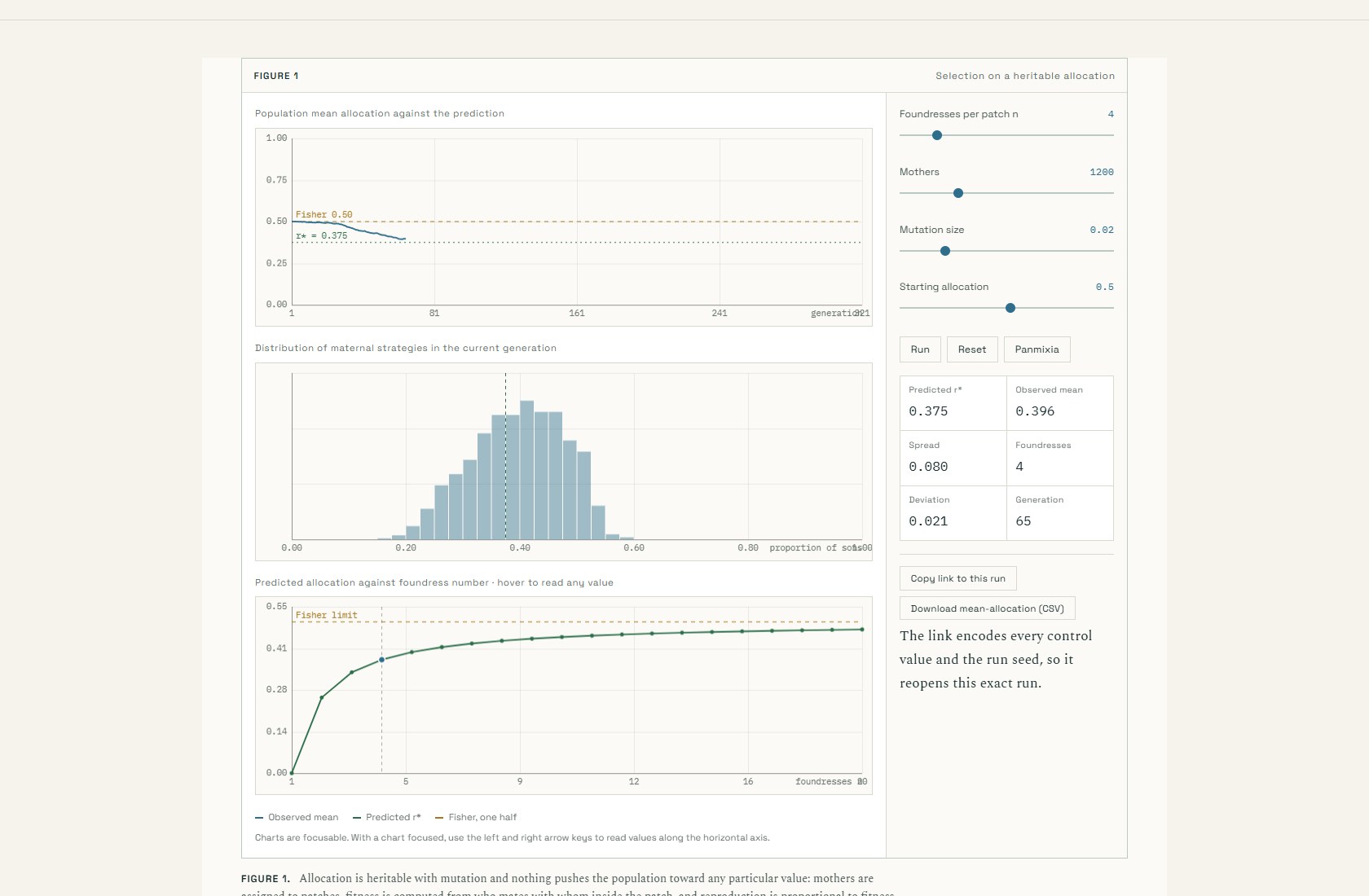
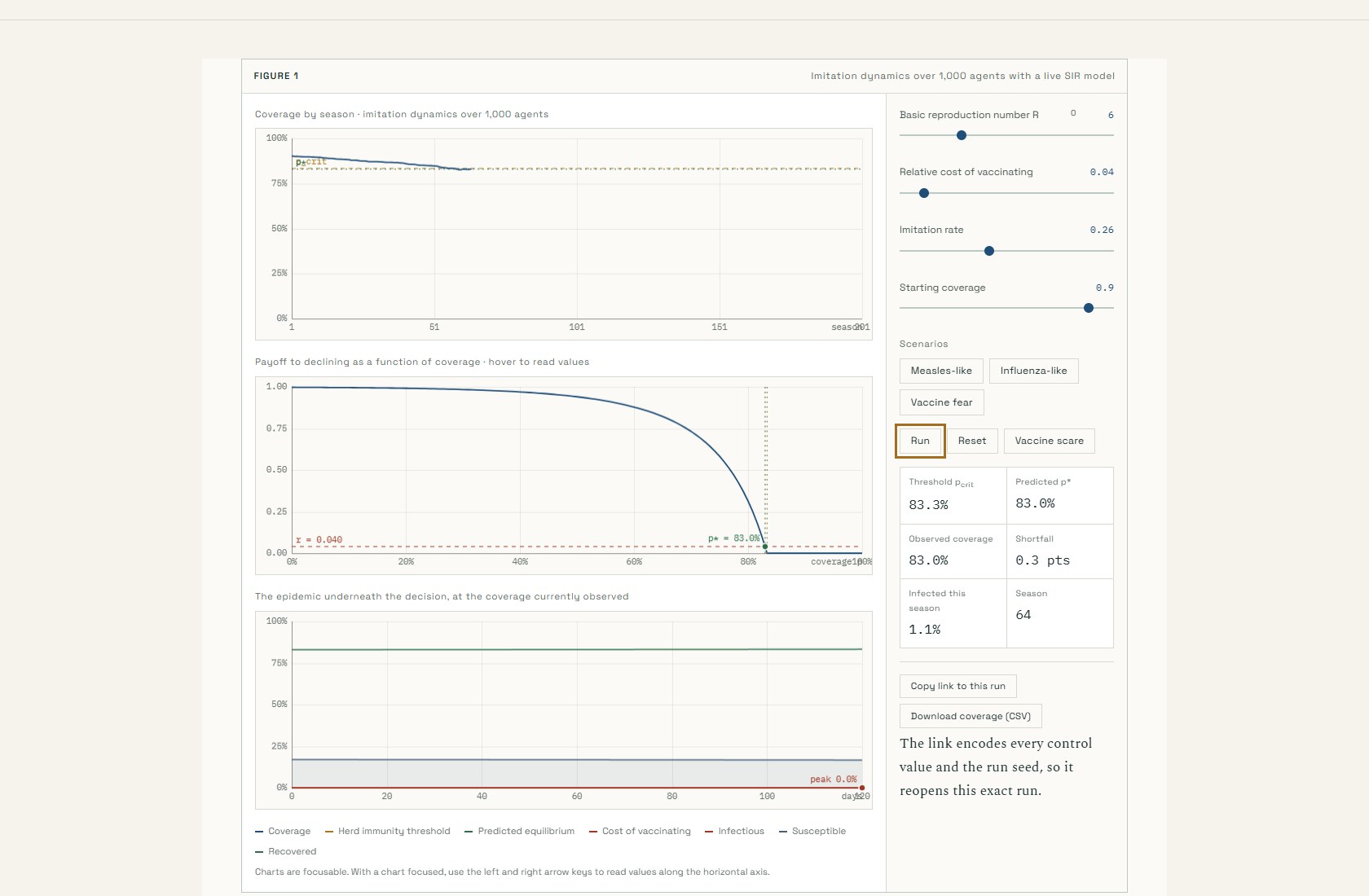
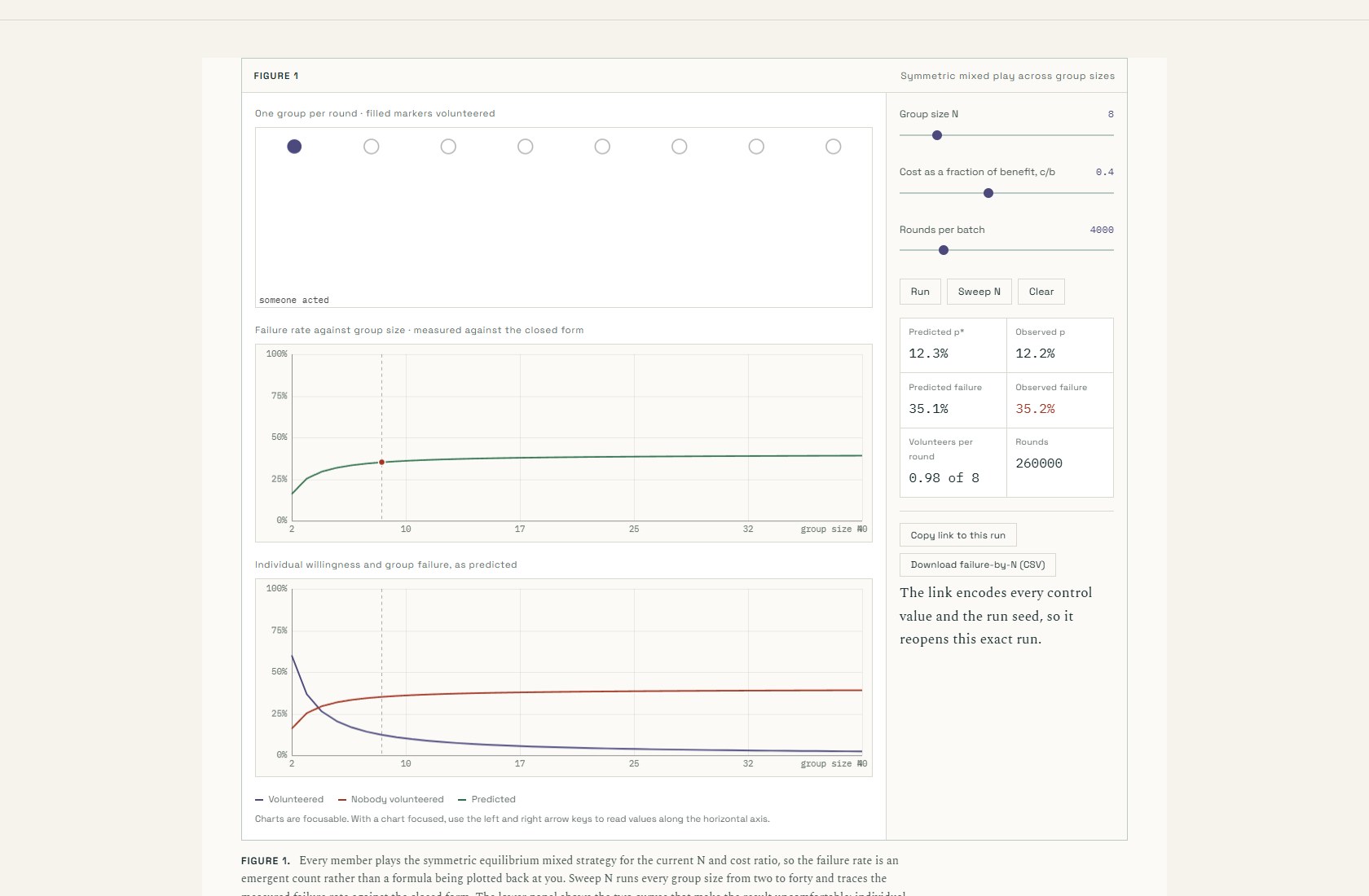
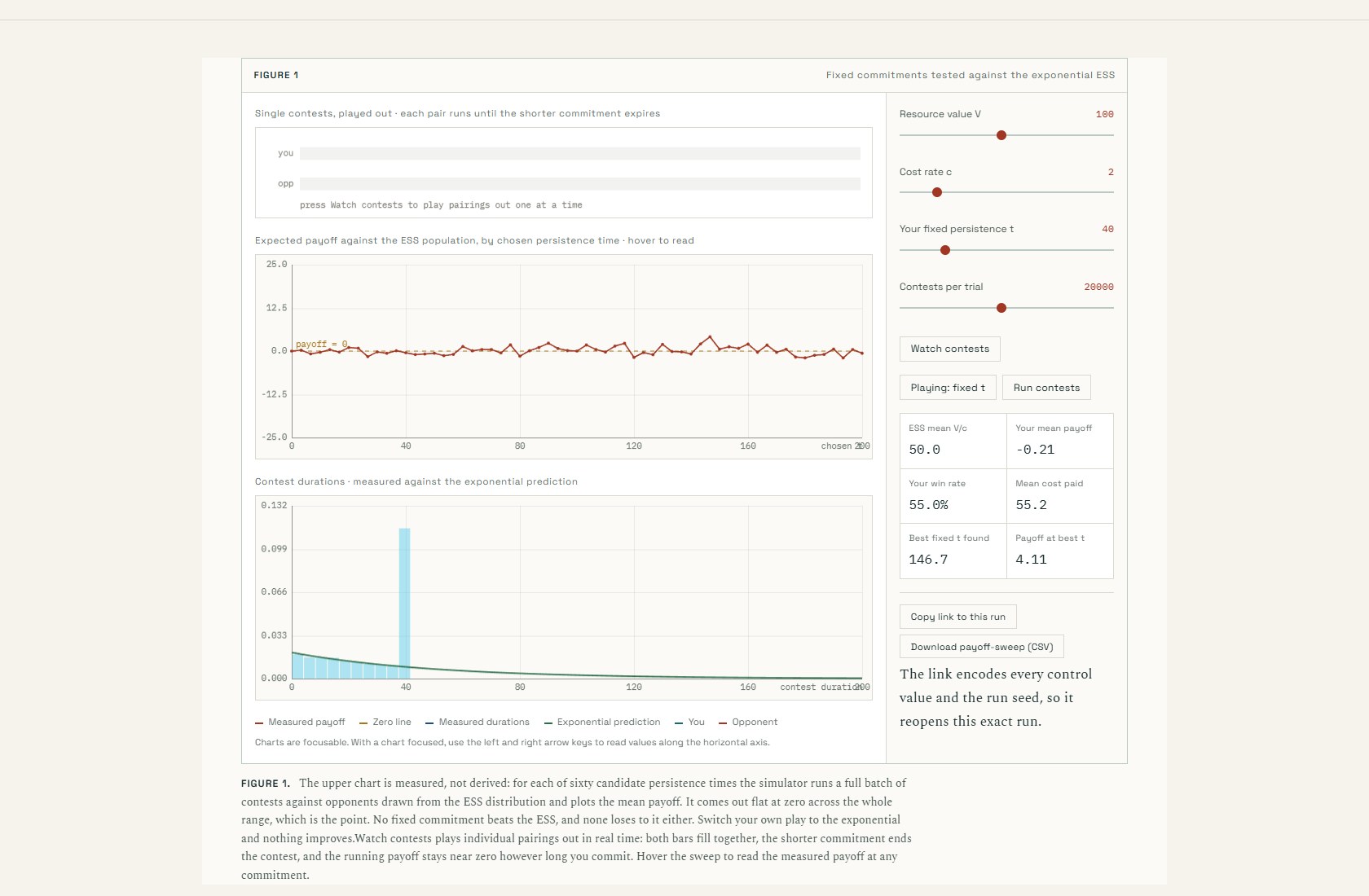
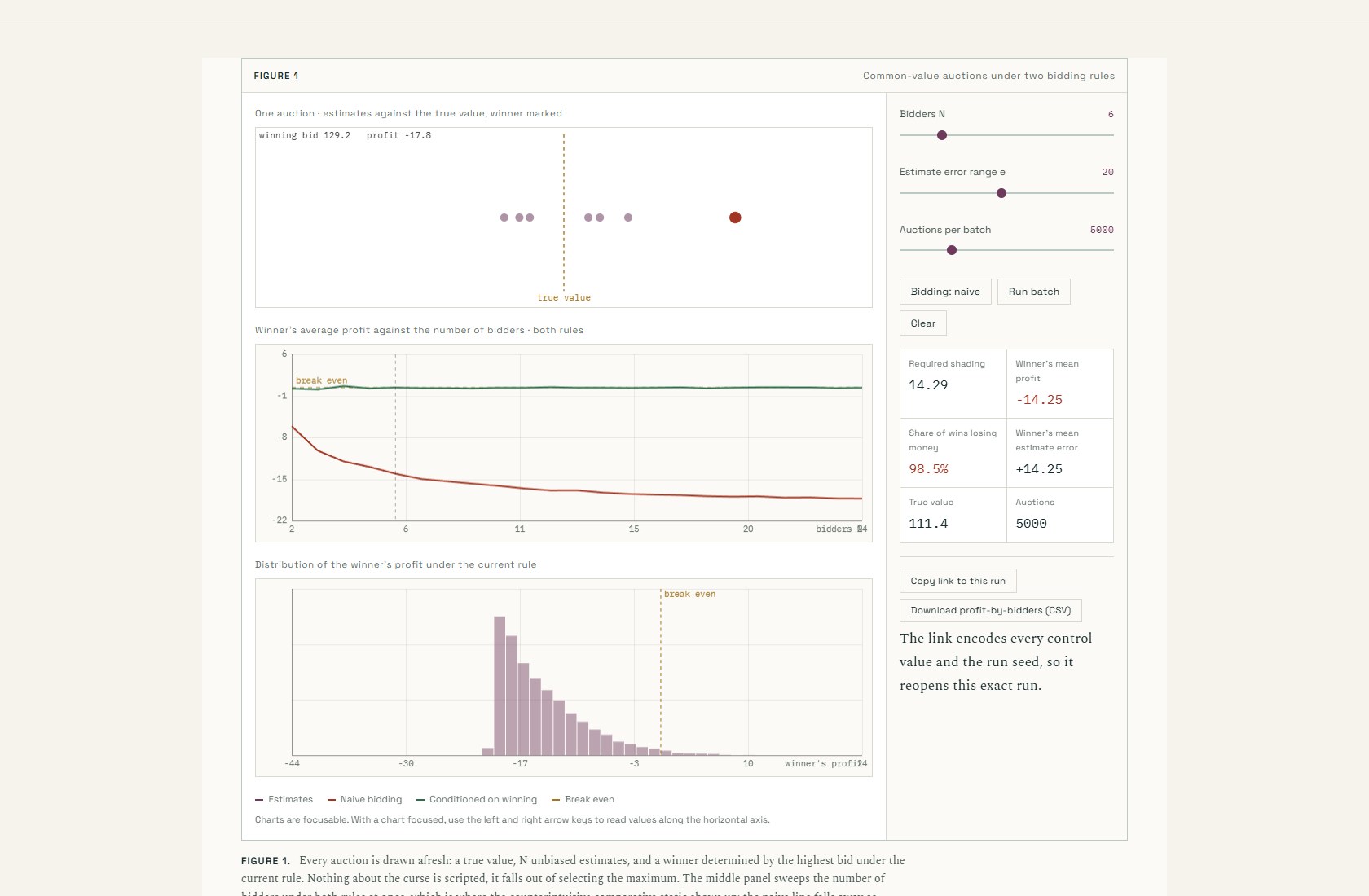
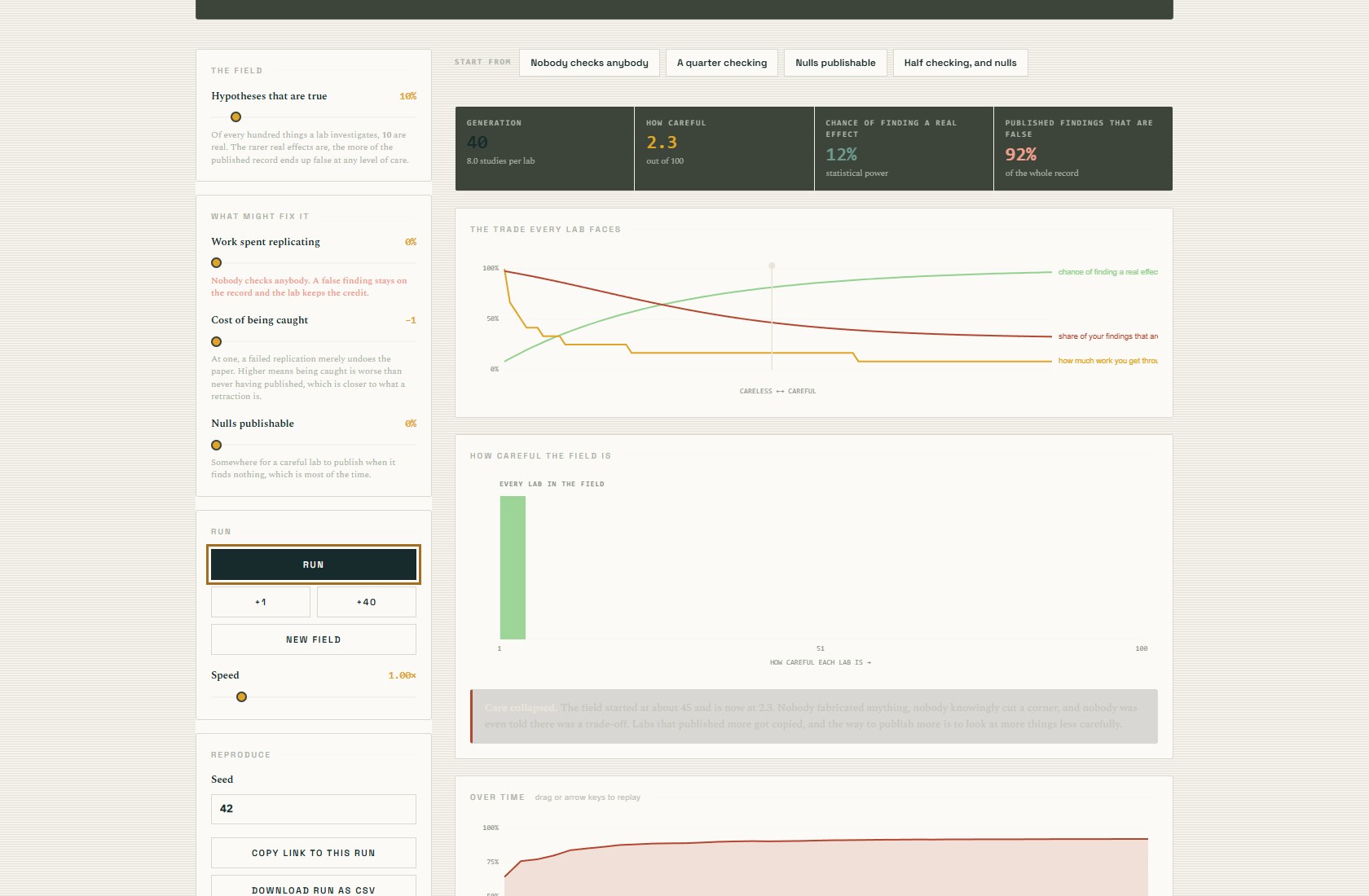
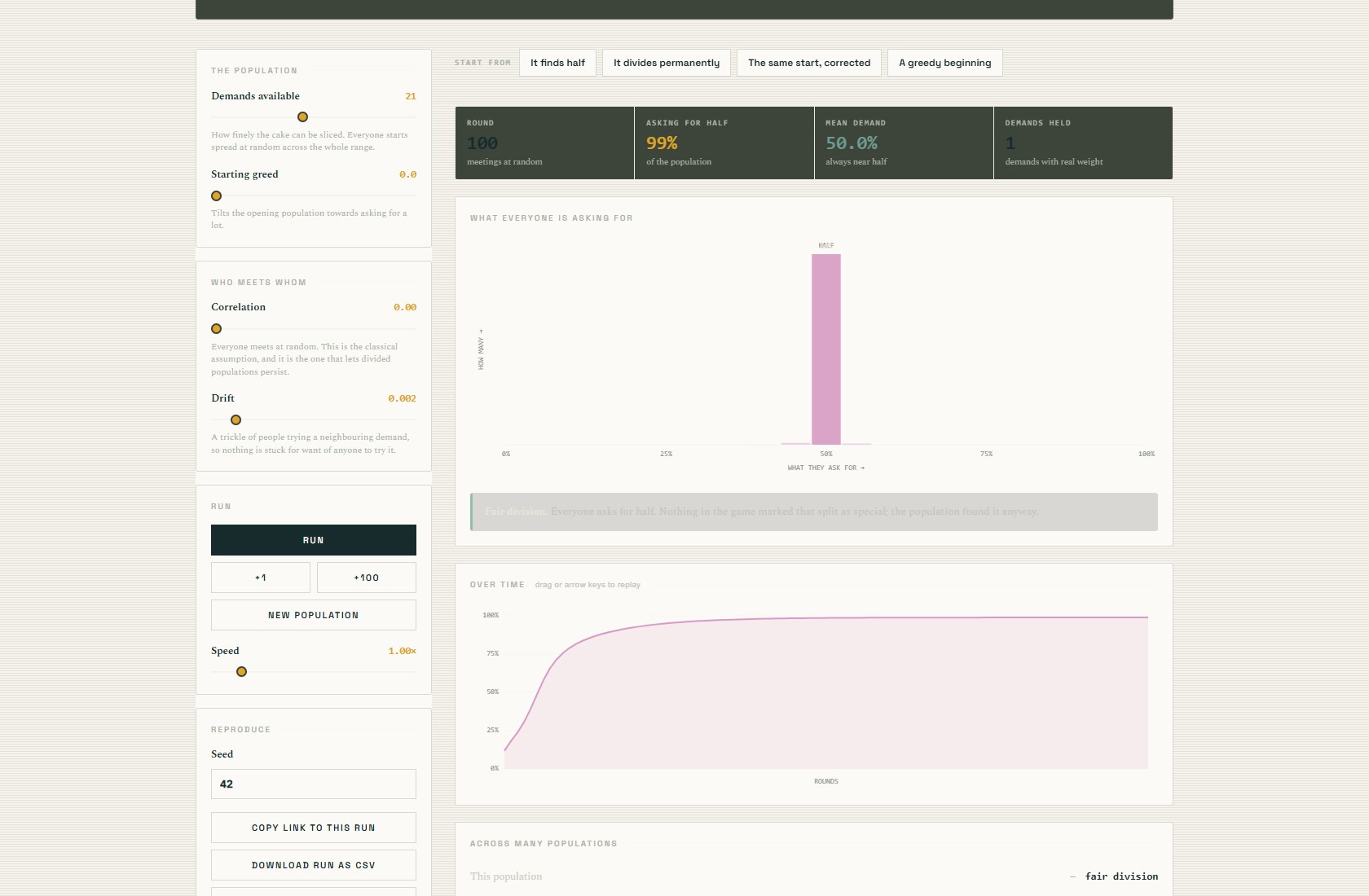
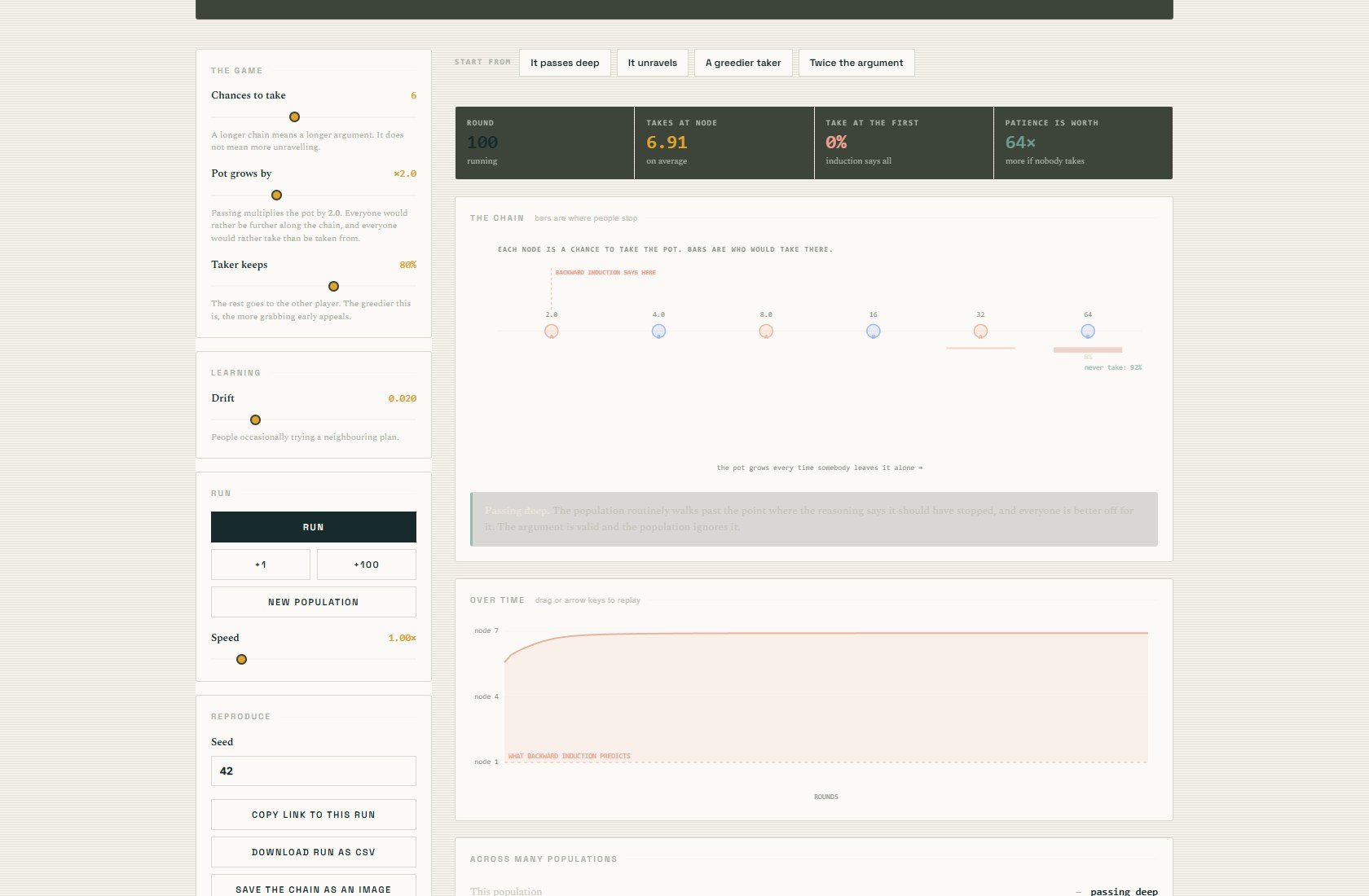
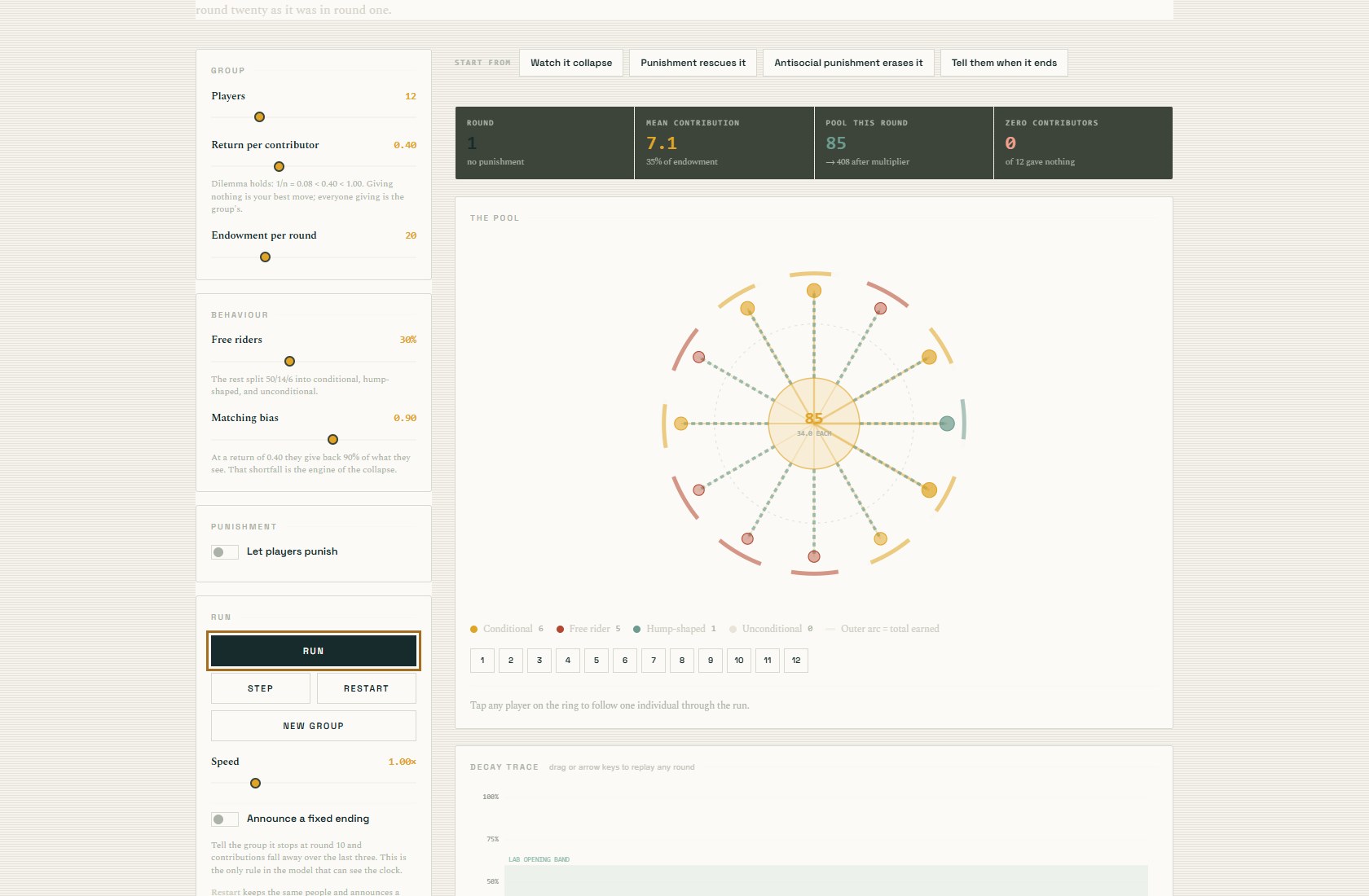
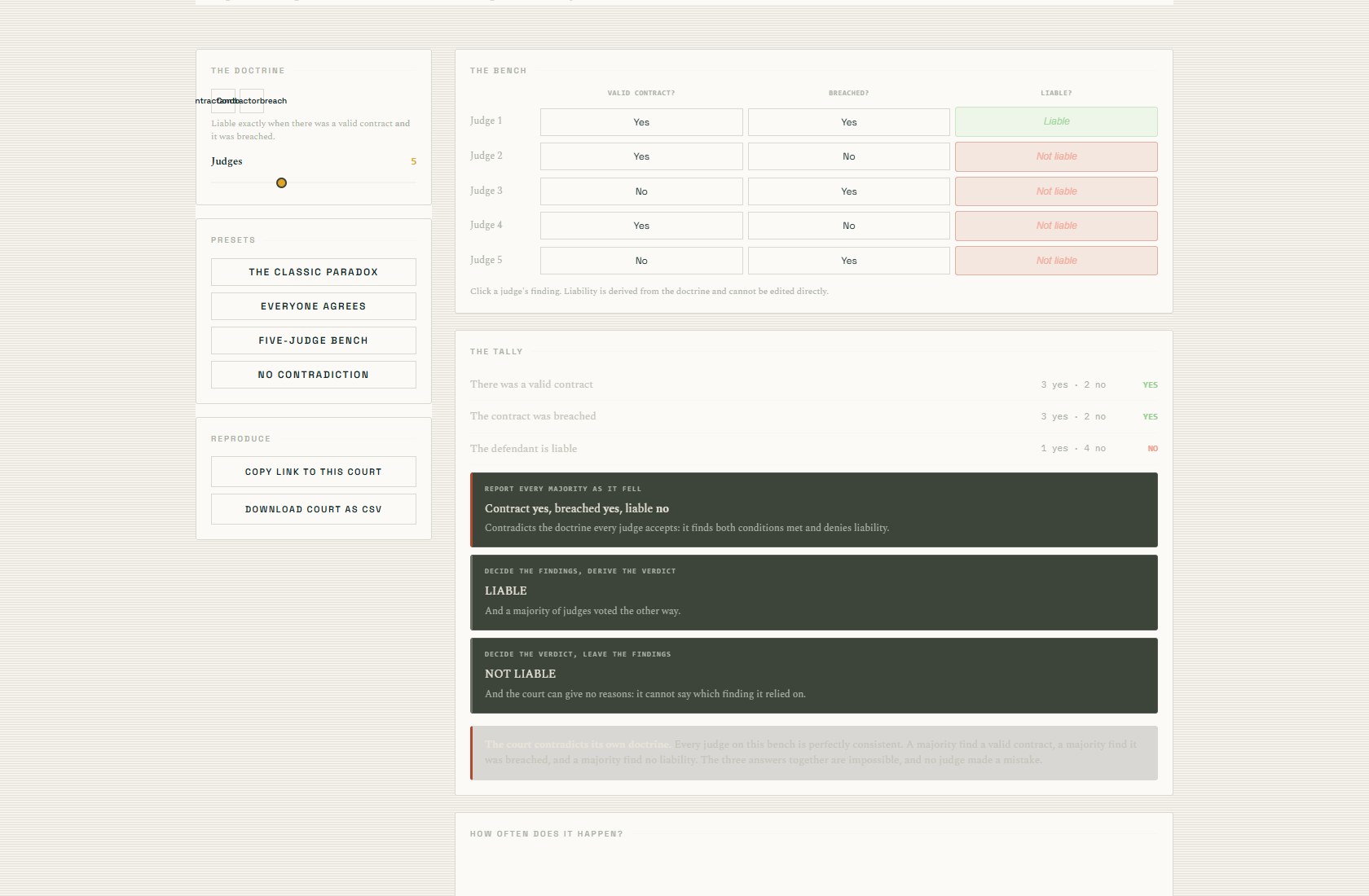
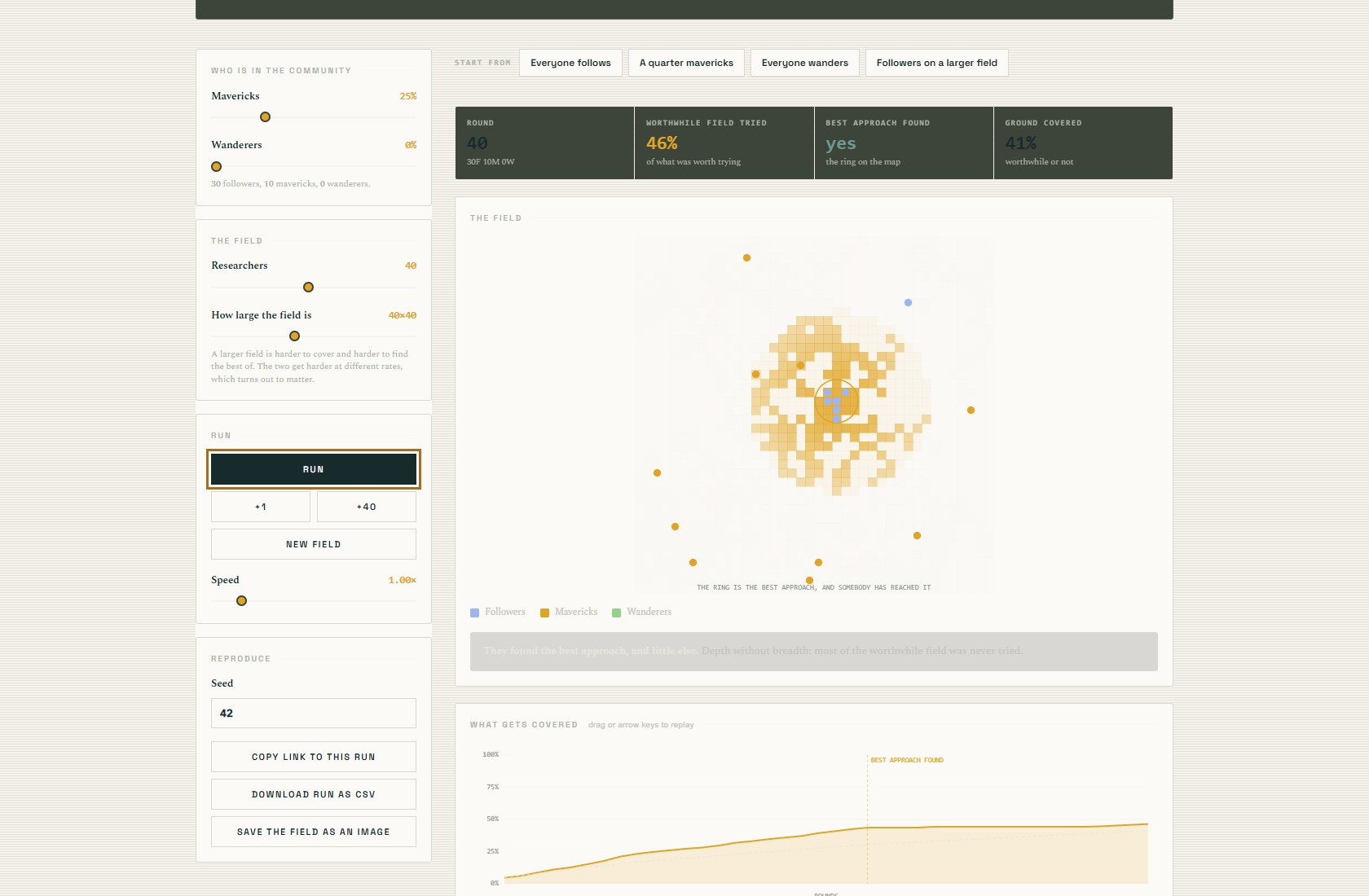
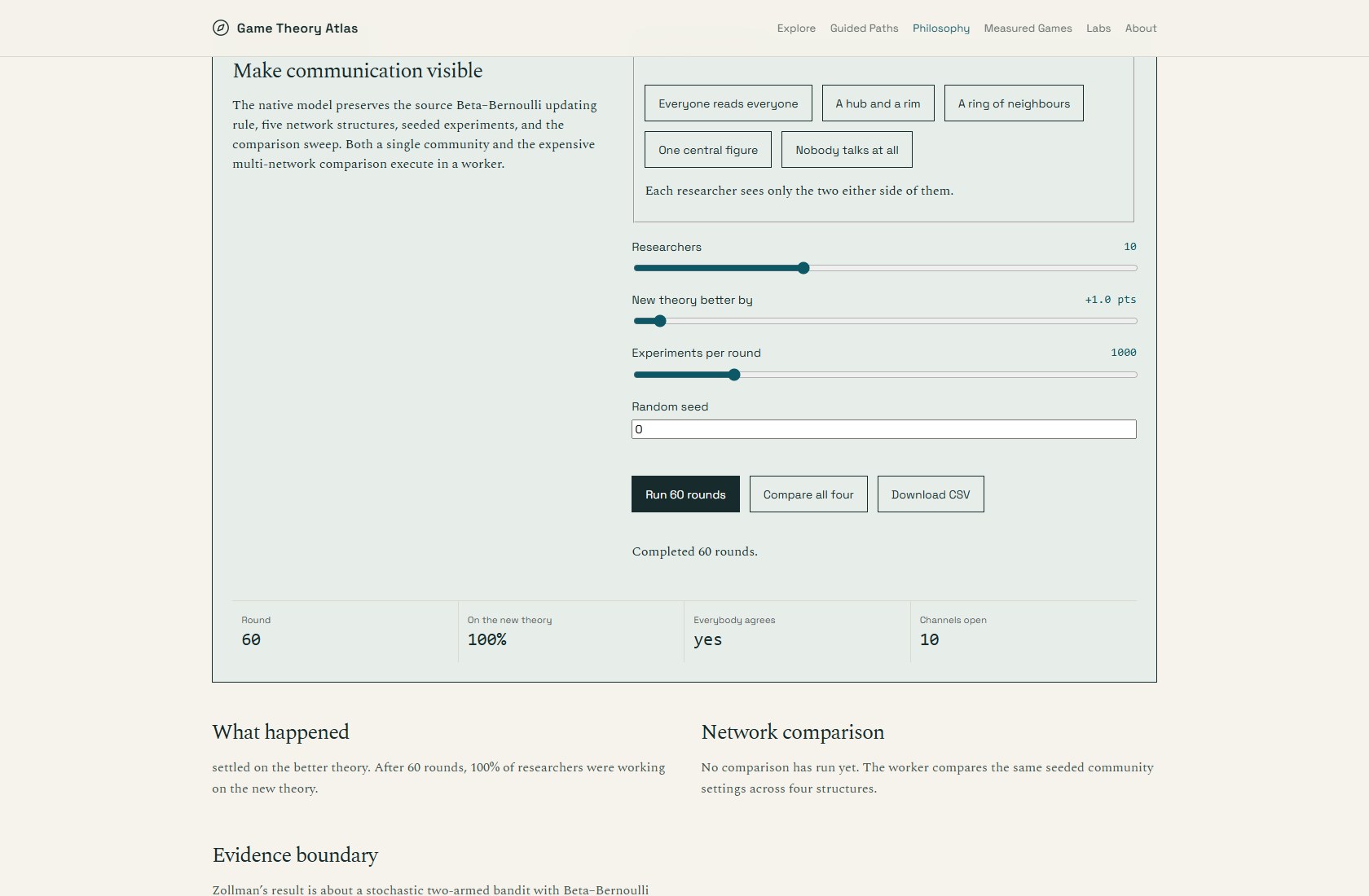
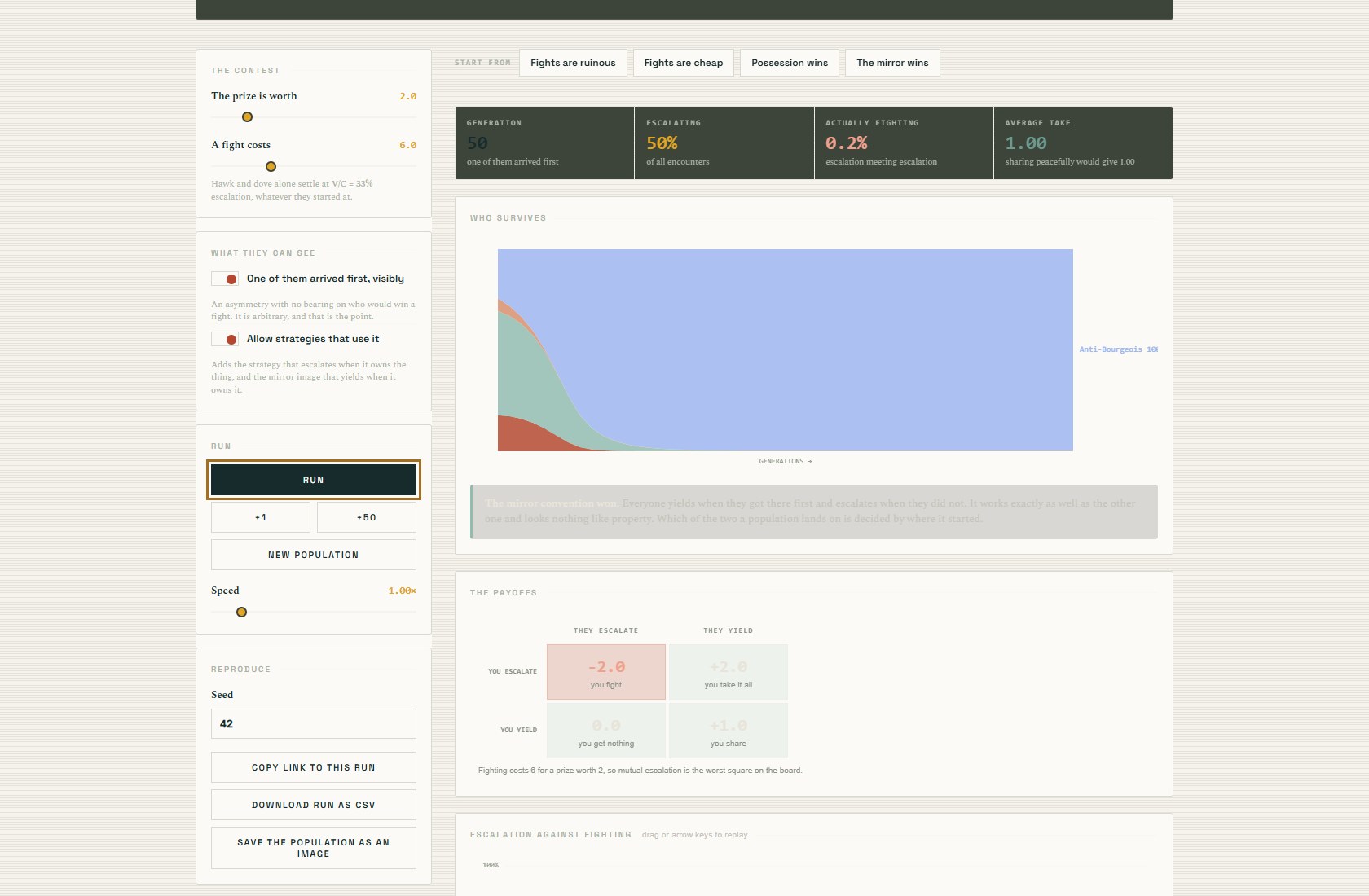
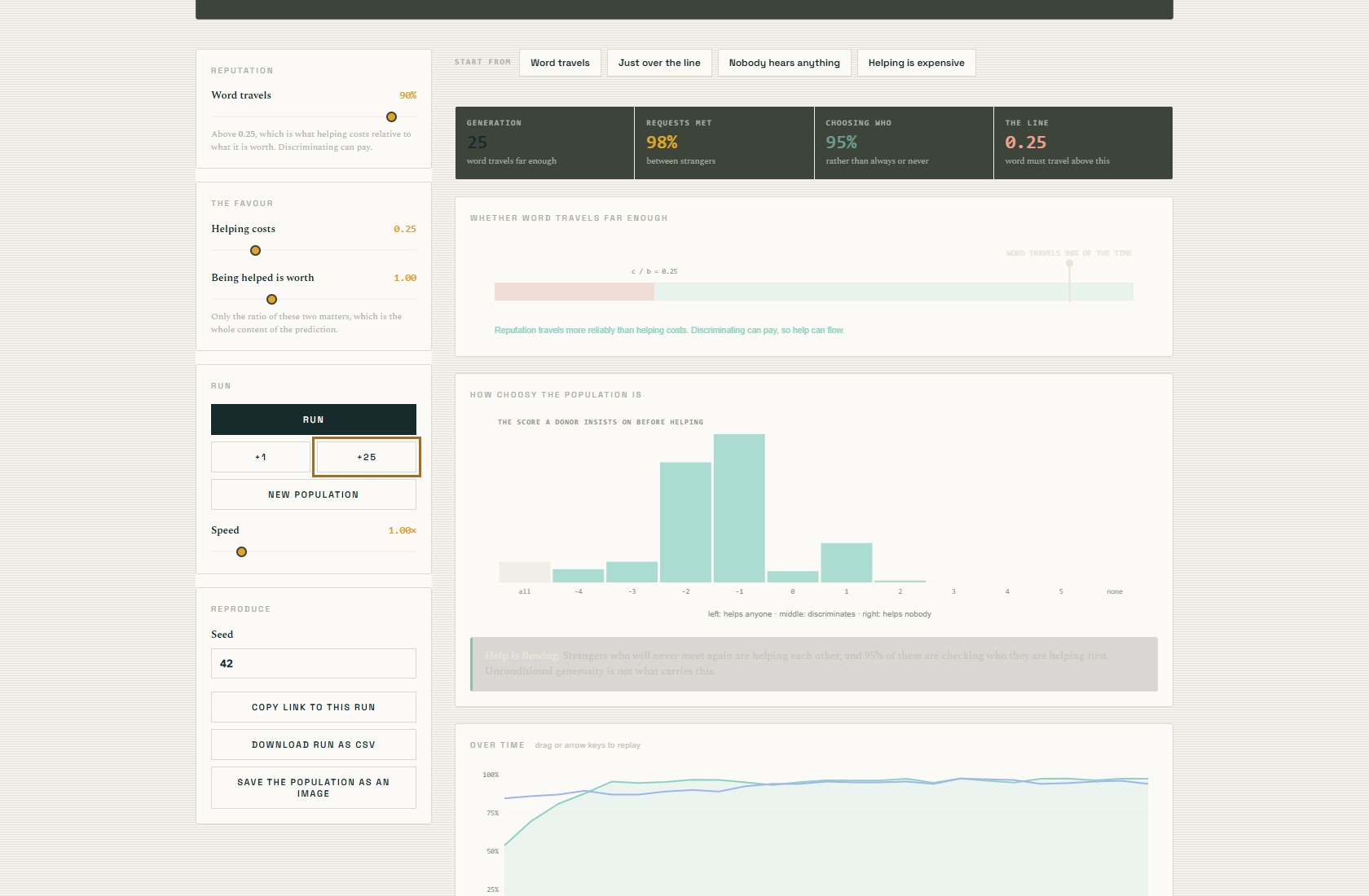
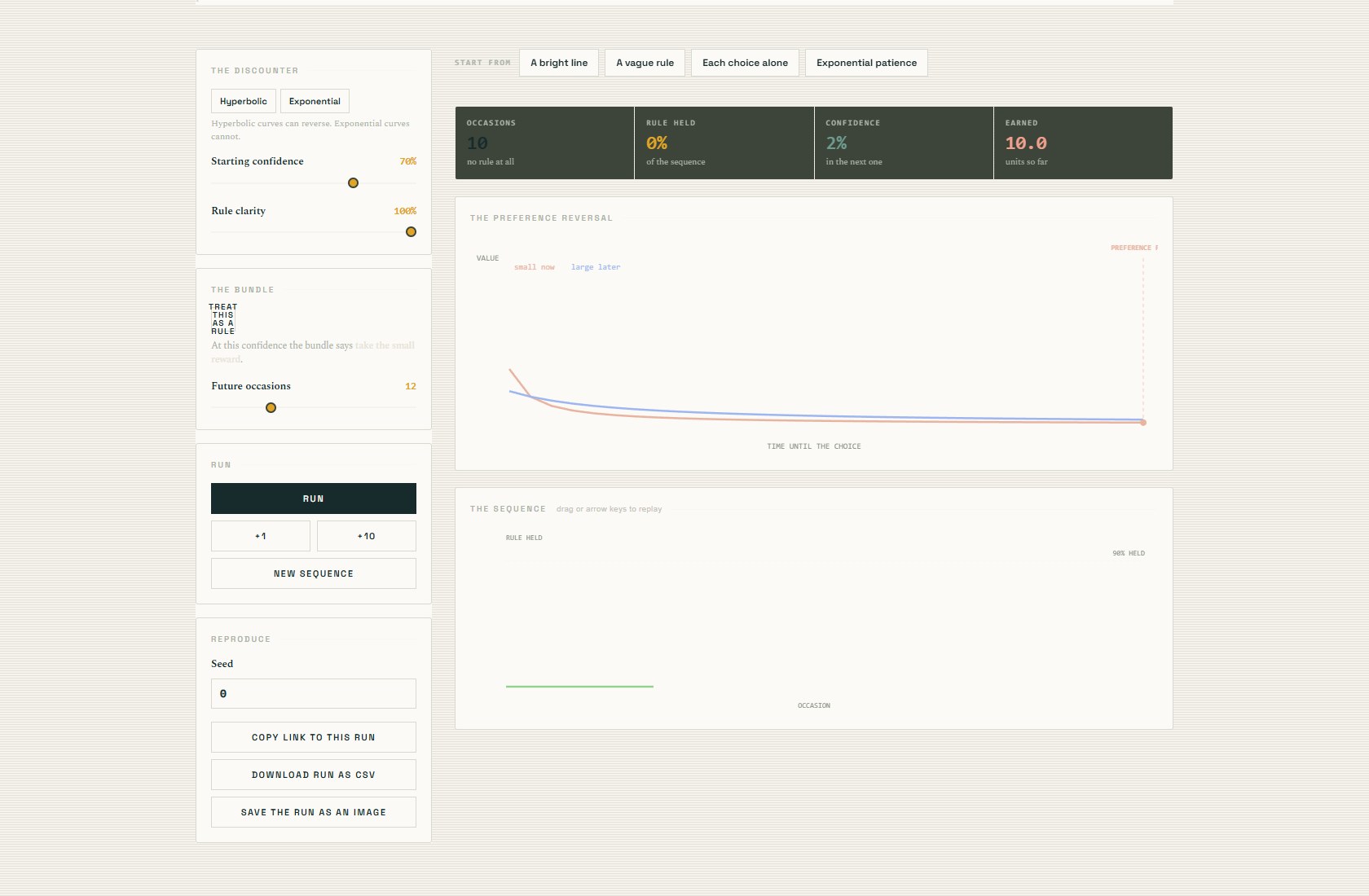
Philosophy & Game Theory
Stag Hunt screenshot, 1 of 41.
Game Theory Atlas is a searchable research and learning environment for exploring cooperation, conflict, coordination, incentives, and collective behavior. Instead of presenting every study as an isolated page, the Atlas connects models, source material, and interactive experiments through a shared catalog and guided paths.
System at a glance
- Catalog: 42 model entries shown on Explore when reviewed on November 8, 2026
- Collections: Philosophy & Game Theory, Measured Games, and Commons Lab
- Learning paths: cooperation, conflict, coordination, collective action, and information
- Experience types: interactive models, article simulations, research papers, and a multi-agent lab
- Application: React and TypeScript with Vite, served as a static site through Nginx
A catalog built for comparison
The Explore page lets visitors search and filter by collection. Each catalog entry carries structured information about its topics, mechanisms, fields, difficulty, route, related models, and citation status. This turns the catalog into a way to move between questions and mechanisms, not just a list of titles.
The Atlas organizes three different kinds of work:
| Collection | What visitors can explore |
|---|---|
| Philosophy & Game Theory | Strategic models and preserved simulations with explanations and interactive controls |
| Measured Games | Research papers paired with model-specific views where an Atlas-native version is available |
| Commons Lab | A configurable multi-agent environment for shared-resource experiments |
Guided paths through the field
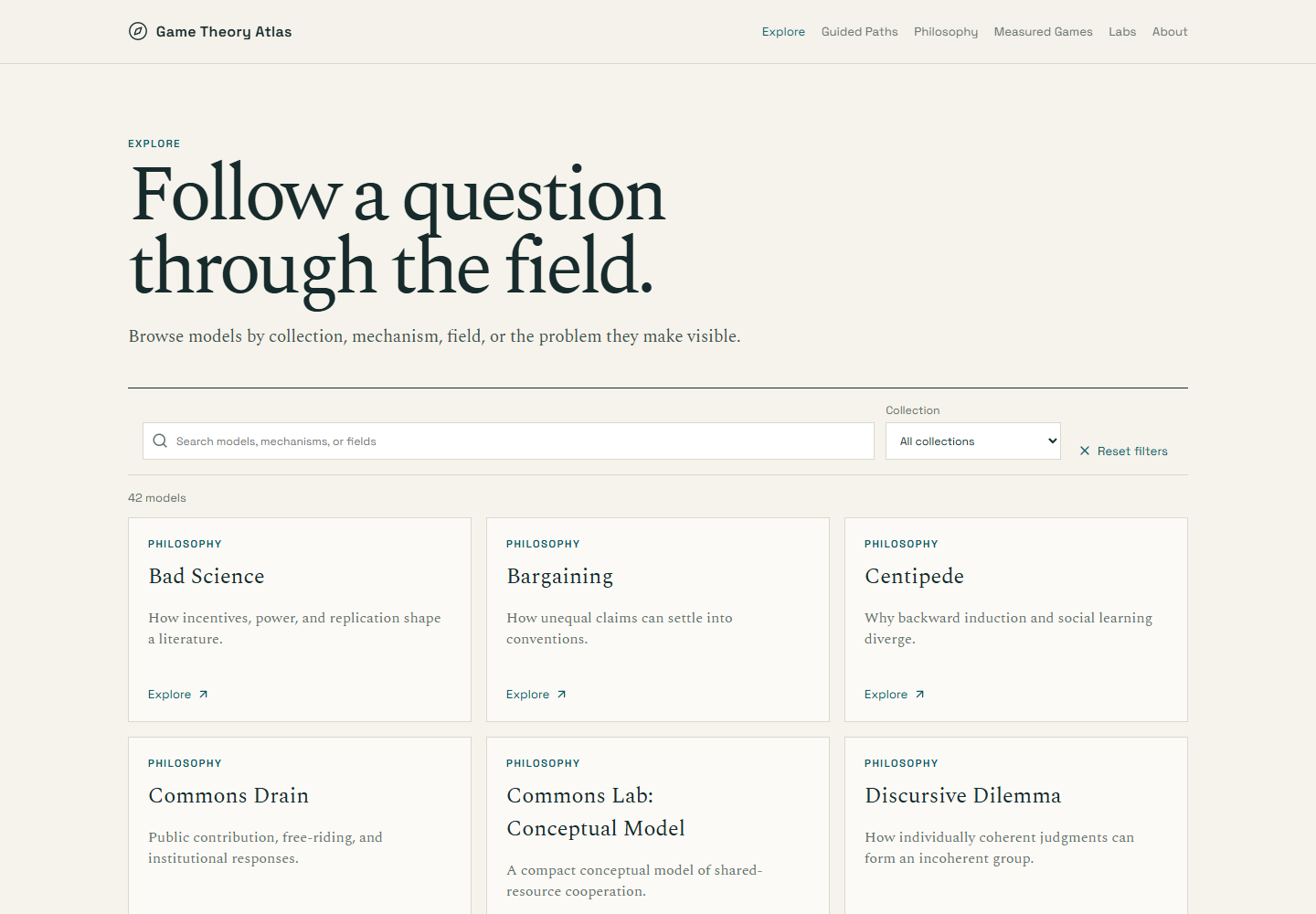
The Guided Paths page links models across collections around a question. For example, a path can move from assurance and reciprocity to reputation and shared-resource institutions. The path view gives visitors a reason to compare how different mechanisms address a related problem, instead of expecting them to discover those relationships by searching a flat catalog.
From a single model to a shared-resource lab
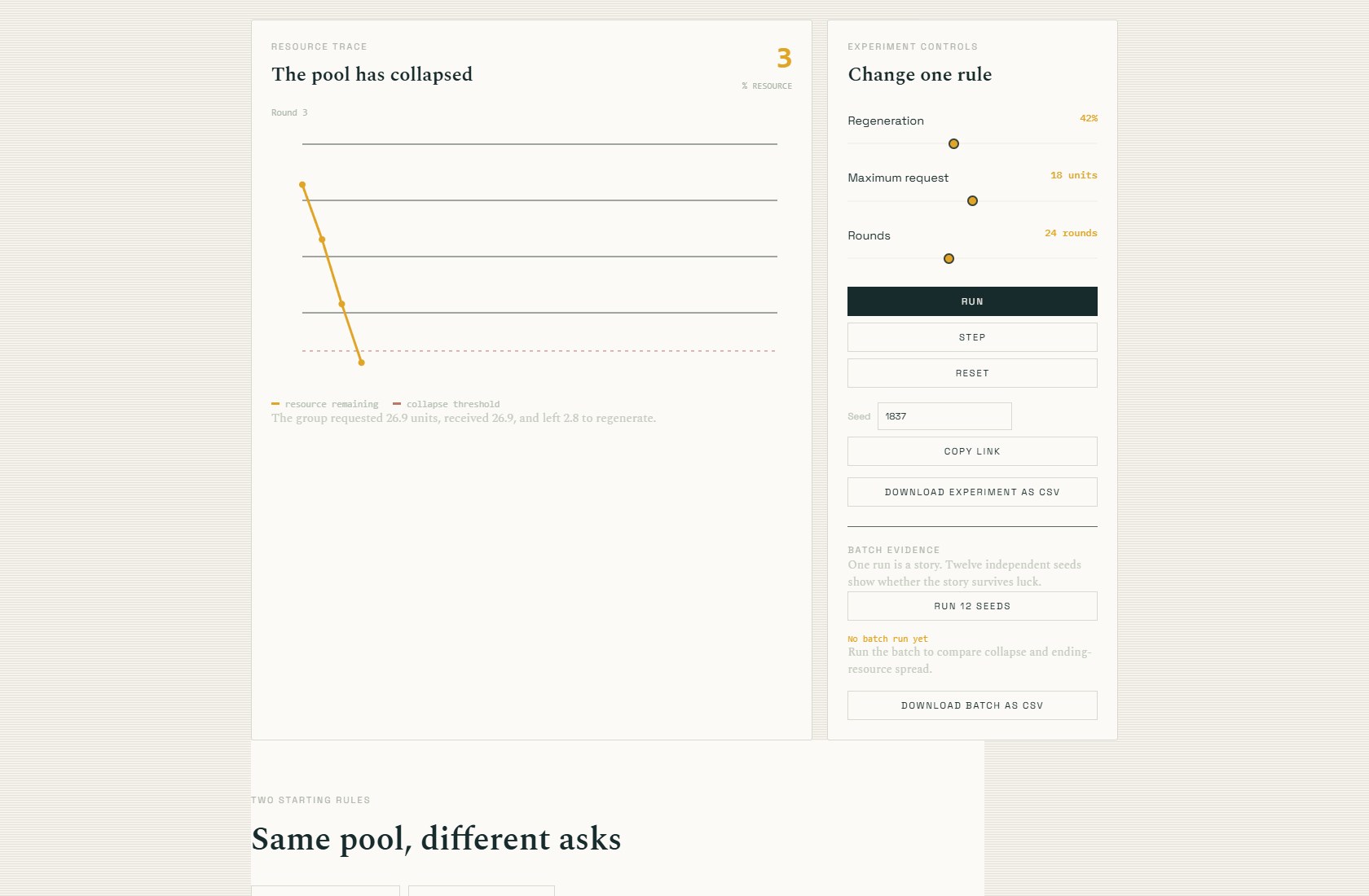
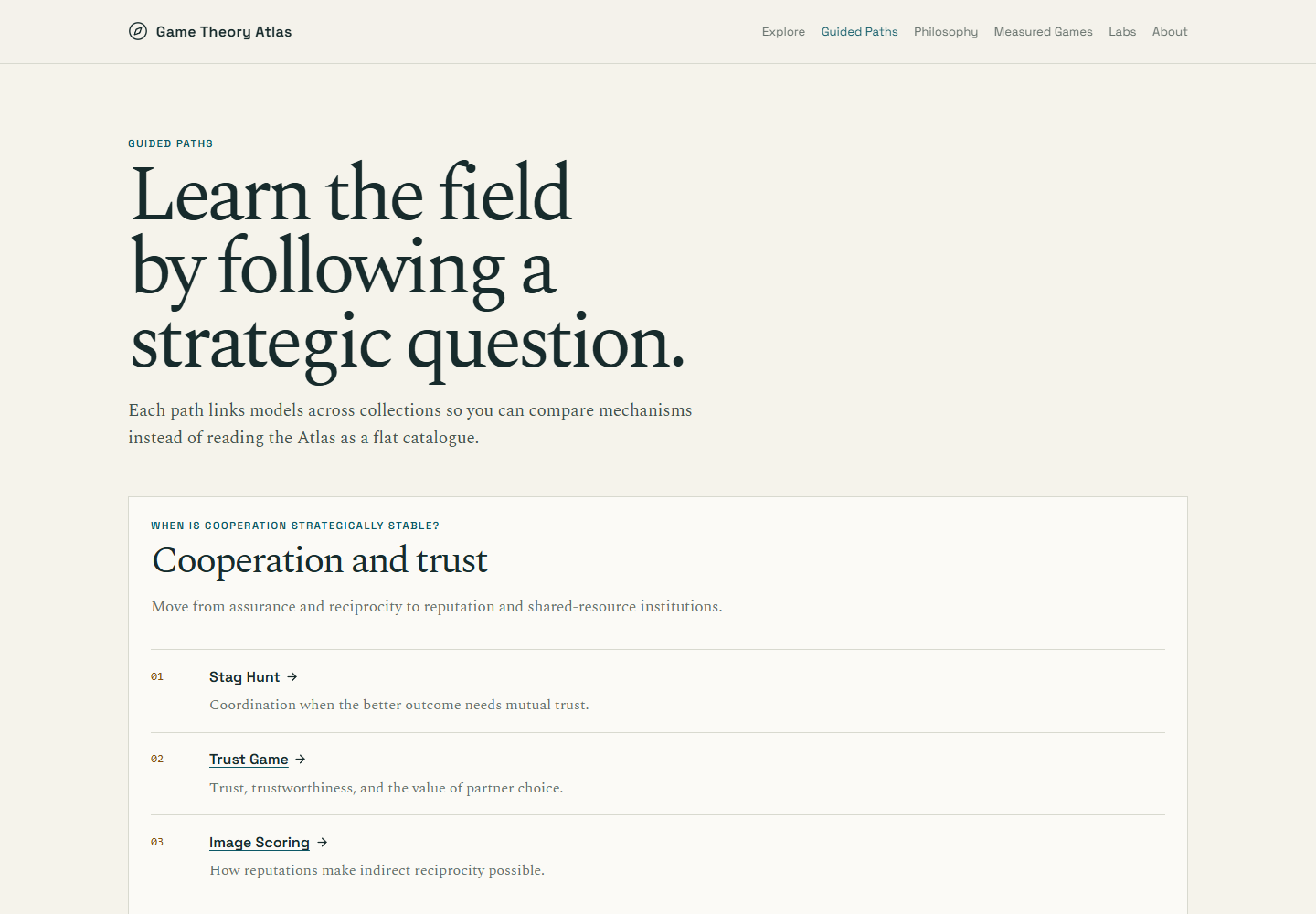
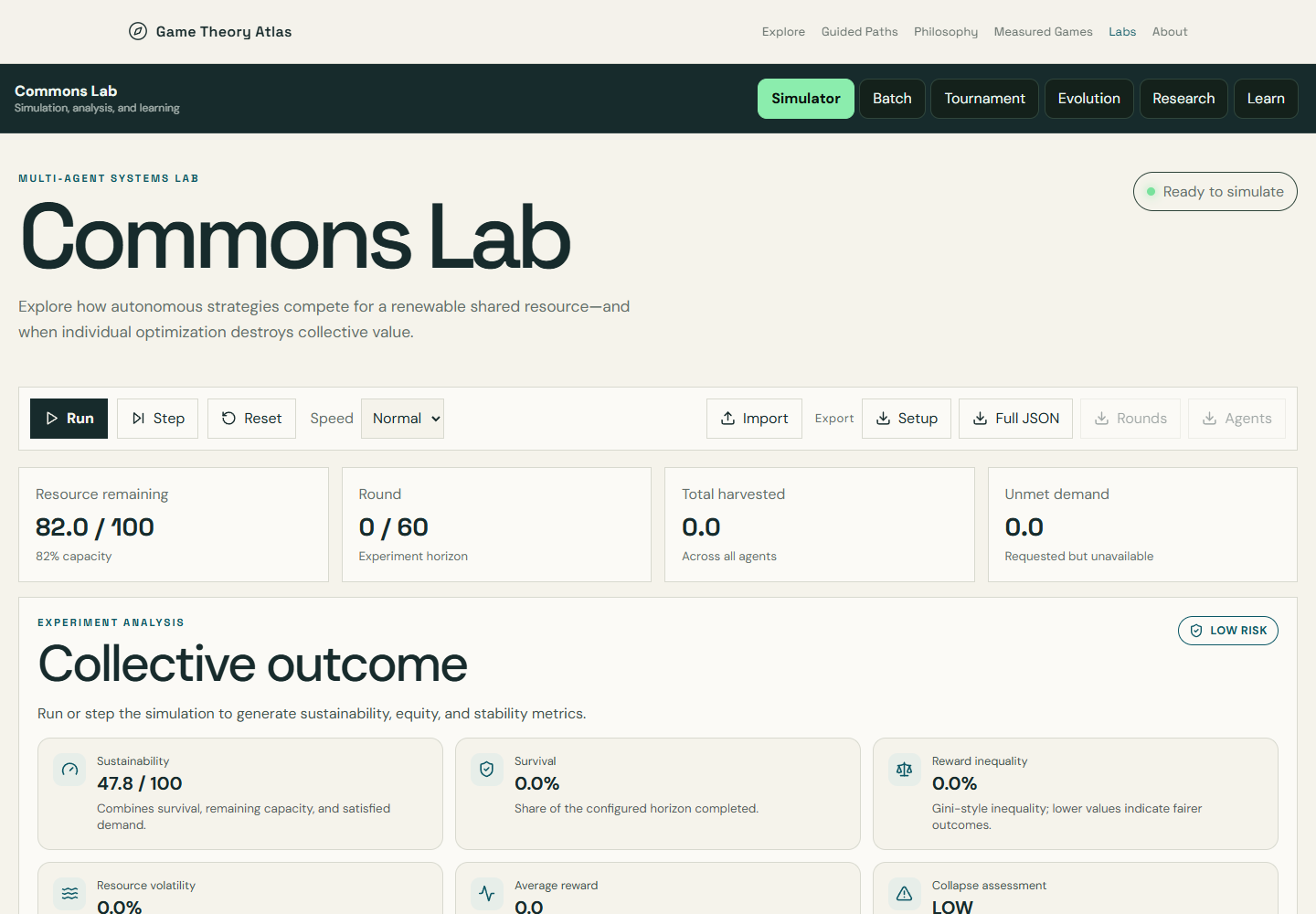
Commons Lab is the Atlas’s deepest interactive experience. Visitors can configure an experiment and run it continuously or step by step, then inspect measures such as remaining resource, survival, reward inequality, and resource volatility. Separate views support batch runs, tournaments, evolution, research, and learning.
The screenshot shows the simulator before a run. Its values are the starting configuration, not a measured result or a claim about real-world communities. This distinction matters because a simulation’s output depends on its assumptions and setup.
Application architecture
The application is built with React and TypeScript, routed as a Vite single-page application, and served by Nginx. A typed catalog model records each entry’s collection, interaction type, topics, mechanisms, related entries, and route. Generated documentation and a migration inventory make the route and preservation boundary inspectable.
That boundary is deliberate. Some entries have Atlas-native interactive routes. Others retain a source-preserved paper or simulation at a dedicated route, sometimes alongside a native version. The original material remains accessible instead of being silently replaced during migration.
Commons Lab and its charting dependencies load only for Commons routes. This keeps the larger experimental interface out of the initial bundle for visitors who are browsing other collections.
Validation and honest scope
The repository separates model, page, and worker-job checks, and its documented release process checks direct navigation and refresh on the key public routes. The Atlas also exposes its health endpoint and canonical discovery routes for production verification.
The live Explore, Guided Paths, and Commons Lab pages were reviewed on November 8, 2026. The catalog reported 42 models at that time. This case study does not claim user adoption, learning gains, or research findings; those outcomes are not documented in the project evidence reviewed here.
Game Theory Atlas is distinct from the Prisoner’s Dilemma simulator, which remains a separate application and case study. The Atlas covers a broader research catalog and Commons Lab, while the standalone project focuses on iterated dilemma strategies and reproducible tournaments.